Song recital with voice and piano
Schwanengesang
Franz Schubert’s final great song collection — a recital evening between farewell, longing, memory and existential depth
Evgenia Fölsche, piano
with changing vocal partners.
A musical farewell of overwhelming intensity
Schwanengesang is one of Franz Schubert’s most impressive song collections. The songs, assembled after his death, bring together different poetic worlds into an evening of remarkable inner breadth: love and loss, distance and memory, the nearness of death and moments of luminous hope stand side by side.
The texts by Ludwig Rellstab, Heinrich Heine and Johann Gabriel Seidl open very different emotional spaces. Schubert transforms them into music of extreme clarity and expressive power — from the flowing impulse of departure through the abysses of loneliness to the quiet intimacy of farewell.
In the interplay of voice and piano, the recital becomes more than a retrospective view of Schubert’s final creative period: it is a concentrated musical encounter with the great themes of human life: longing, love, transience and consolation.
Concert offer / Song collection
Schwanengesang can be offered as a complete song recital — depending on the setting also with an introduction, spoken transitions or a dramaturgically guided concert version.
The programme is suitable for classical concert series, song festivals, chamber music programmes, Schubert cycles, cultural associations and presenters looking for a profound and immediately moving song recital.
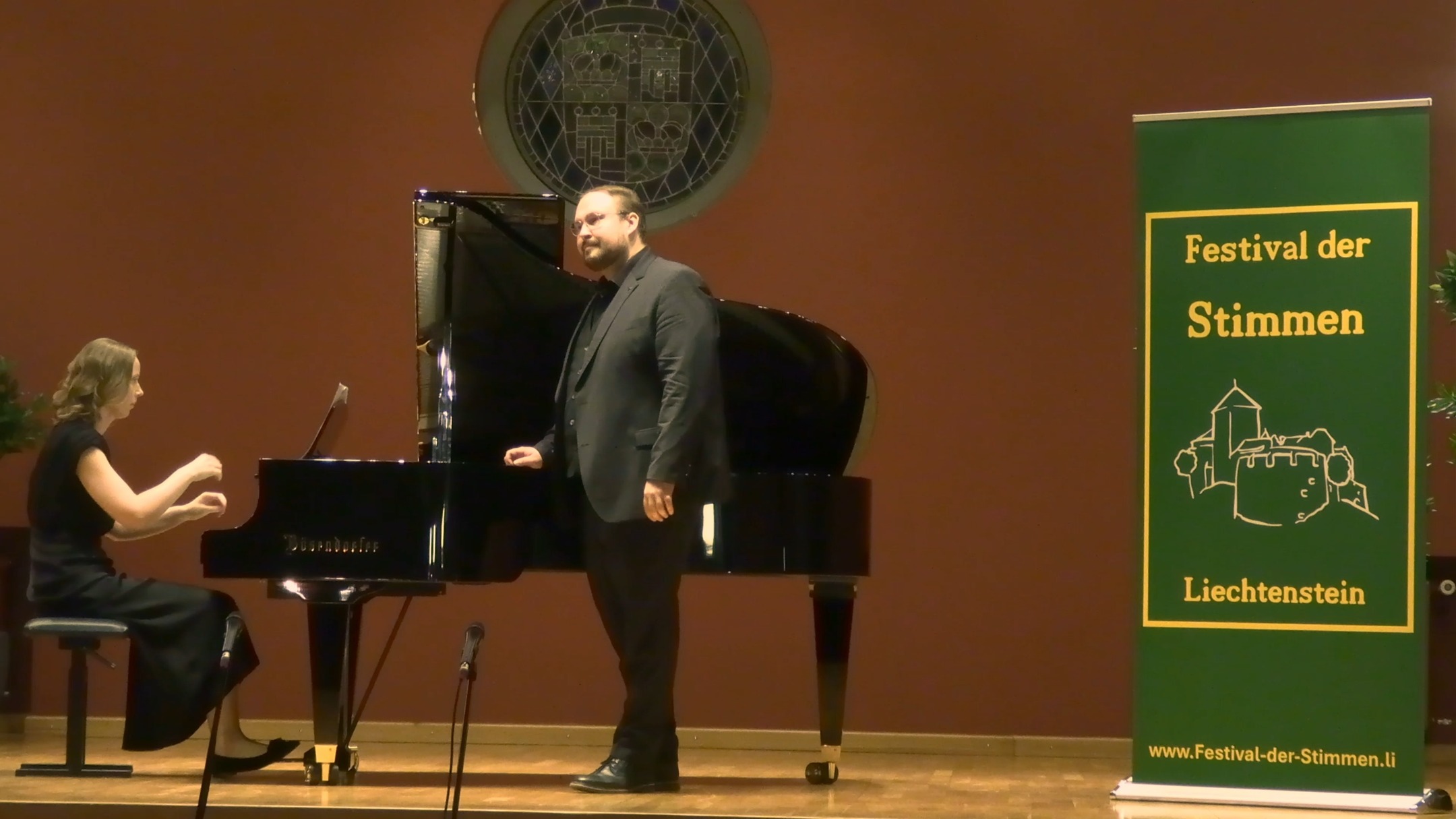
The performance can be created, for example, with Johann Kristinsson and Evgenia Fölsche. Depending on date, venue and artistic context, further casting options can also be arranged.
Programme idea
Schwanengesang stands at the end of Franz Schubert’s song writing and at the same time opens once more an unusually wide expressive space. The songs after Ludwig Rellstab unfold a world of departure, nature imagery, distant love and longing movement.
With the Heine settings, the tone becomes more concentrated: the music turns starker, sharper and psychologically more abyssal. In songs such as Der Atlas, Ihr Bild, Die Stadt or Der Doppelgänger, musical scenes of almost visionary intensity emerge.
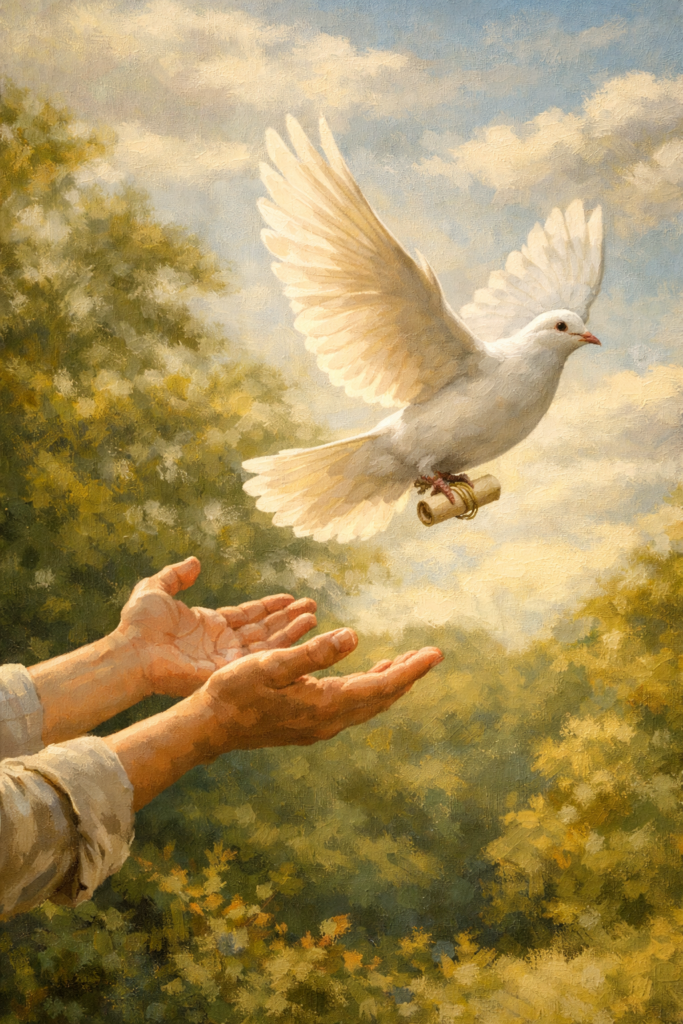
The concluding Die Taubenpost, after Johann Gabriel Seidl, lets another colour shine through once more: lightness, movement and a subtle tone of memory and farewell. The result is an evening that does not tell a linear story, but places different states of the soul side by side — a broad panorama of longing, loneliness and consolation.
Composer in the programme
For presenters
Schwanengesang is suitable for song series, Schubert festivals, chamber music programmes, cultural associations, music academies, lecture-recitals and concert formats that present Schubert’s late song writing in concentrated form.
- Scoring: voice and piano
- Duration: approx. 60–70 minutes, depending on concert version and moderation
- Work: Franz Schubert: Schwanengesang D 957, songs after Ludwig Rellstab, Heinrich Heine and Johann Gabriel Seidl
- Instrument: well-tuned grand piano or concert grand
- Venue: concert hall, chamber music hall, song recital hall or cultural venue with suitable acoustics for art song
- Optional: introduction, moderated version, lecture-recital or additional commentary on Schubert’s late song writing
- Vocal partners: for example Johann Kristinsson; further casting options by arrangement
Programme materials, repertoire information and additional documentation can be made available to presenters on request. The specific cast and concert version are tailored individually to the concert series, venue size and audience.
Concert enquiry
For concert enquiries, availability, casting options, fee arrangements and additional materials, I would be delighted to hear from you.
Get in touch