Franz Schubert: Winterreise
Franz Schubert – Winterreise:
- Gute Nacht (Good Night)
- Die Wetterfahne (The Weather Vane)
- Gefror’ne Thränen (Frozen Tears)
- Erstarrung (Numbness)
- Der Lindenbaum (The Linden Tree)
- Wasserfluth (Flood of Tears)
- Auf dem Flusse (On the River)
- Rückblick (Retrospect)
- Irrlicht (Will-o`-the-Wisp)
- Rast (Rest)
- Frühlingstraum (Spring Dream)
- Einsamkeit (Loneliness)
- Die Post (The Post)
- Der greise Kopf (The Grey Head)
- Die Krähe (The Crow)
- Letzte Hoffnung (Last Hope)
- Im Dorfe (In the Village)
- Der stürmische Morgen (The Stormy Morning)
- Täuschung (Delusion)
- Der Wegweiser (The Signpost)
- Das Wirtshaus (The Inn)
- Muth (Courage)
- Nebensonnen (Mock Suns)
- Der Leiermann (The Hurdy-Gurdy Man)

Franz Schubert: Winterreise D 911 (1827) stands at the endpoint of Romantic song art: 24 stations of an unnamed wanderer, based on poems by Wilhelm Müller. Without external plot, yet with extraordinary inner consistency, Schubert condenses loneliness, cold, self-interrogation and a spare, almost “de-romanticized” musical language. Winterreise is not a travelogue, but an inner topography: path, frost, dream, illusion, resolve, emptiness – leading to the open final question of Der Leiermann.
Four Essays & Background Perspectives on Winterreise
In addition to the individual articles on each song, there are four new foundational essays illuminating the cycle from the perspectives of composition, literature, psychology and biography:
How Schubert, in 1827, shaped a complete world of art in a remarkably short time – with a look at the autograph, his working methods, the time of composition and publication. Winterreise – Müller’s Radically Romantic Text
Written between 1821 and 1824: poetic construction and the Romantic spirit of the age. Why Müller’s “folk-song tone” becomes literature of radical inwardness. Winterreise as a Journey into the Abyss of the Soul
A depth-psychological reading: what is radical here? Why is there no catharsis? Why does the work still move us today – and why does it feel so “modern”? Schubert’s Illness & Winterreise
Historical background without myth: illness, strain, productivity – and how this reality sharpens the existential seriousness of the setting.
Work Information & Overview
- Title: Winterreise D 911 – Song cycle after poems by Wilhelm Müller
- Composer: Franz Schubert (1797–1828)
- Poems: Wilhelm Müller, Winterreise (1823/24)
- Composition: 1827; First publication: 1828 (in two parts)
- Scoring: Voice & piano (transpositions are common)
- Scope: 24 songs; performance duration approx. 65–80 minutes
- Poetics: existential monologue cycle; images of nature as inner metaphors
- Position: late work; culmination of the Romantic art song
Genesis, Sources & Context
Schubert encountered Müller’s poems already in the early 1820s (Die schöne Müllerin, 1823). Winterreise intensifies the tone even further: what matters is not a biographical “case history,” but the stream of consciousness of a figure who transforms outward scenes into inward findings. The historical division into two halves (12 songs each) is due to publishing circumstances, yet it is dramatically convincing: Part I unfolds orientation, loss and inner overheating; Part II cools down, drives toward sobriety and ends in the Leiermann.
Characteristic is Schubert’s ascetic texture: drone tones, detached chords, rigid ostinatos, lines close to speech. Here lies the astonishing modernity of the cycle: it refuses consoling glitter in order to gain clarity.
Structure of the Cycle (24 Songs) – Short Commentaries & Links
- 1. Gute Nacht – Departure in the night; calm march, resolve in the shadow of modulation.
- 2. Die Wetterfahne – Fickleness: sharp accents, cold wind in the piano.
- 3. Gefrorne Tränen – Warmth “within the cold”: tears as a frozen trace.
- 4. Erstarrung – Driven search: hounding motion versus dead image.
- 5. Der Lindenbaum – Beckoning memory; image of repose with a dark undertone.
- 6. Wasserflut – Thaw as upheaval; deep piano texture, wide breathing spaces.
- 7. Auf dem Flusse – Ice crust as diary page; engraving within a rigid pulse.
- 8. Rückblick – Breathless sprint into the past; irony of memory.
- 9. Irrlicht – Flickering direction; harmonic deception.
- 10. Rast – Rest without recovery; silence exposes the wounds.
- 11. Frühlingstraum – Sweet image versus cold awakening; torn surface.
- 12. Einsamkeit – “Like a dark cloud”: broad line, empty center.
- 13. Die Post – Outer noise as signal of the heart; cheerful appearance, nervous punchline.
- 14. Der greise Kopf – Simulated old age: frost as metaphor of death, disillusionment.
- 15. Die Krähe – Fidelity of death; high ostinato, cold proximity.
- 16. Letzte Hoffnung – Leaf allegory: micro-drama of hope.
- 17. Im Dorfe – Dream economy of the sleepers; sober distancing.
- 18. Der stürmische Morgen – A lightning piece; recognition without consolation.
- 19. Täuschung – Dancing illusion; operatic brilliance as mask.
- 20. Der Wegweiser – Asceticism of resolve; triple-meter thrust, narrow step.
- 21. Das Wirtshaus – Graveyard chorale; denied shelter.
- 22. Mut! – Formula of defiance; brief adrenaline surge.
- 23. Die Nebensonnen – Farewell to light; A–B–A, sarabande-like tread.
- 24. Der Leiermann – Drone and open ending; question without answer.
All linked titles open detailed individual articles with text, work information, analysis, performance practice and FAQ.
Musical Language & Dramaturgy
Winterreise lives by simplicity with sharpness. Many of the songs are formally small (1–3 minutes), yet their “weight” arises from the intelligent friction between text, pulse and color. Instead of decorative flourish, Schubert relies on ascetic texture, precise illumination of words and rhythmic iconography: step, frost, breath, drone.
Formal Types & Textual Proximity
- Through-composed: the course of the text governs the form.
- Strophic / varied strophic: recurrence as ritual, small changes of color carry meaning.
- Tripartite (A–B–A): return framing an insight.
Keys, Tone Colors & “Coldness”
The cycle avoids lasting “well-being.” Minor-mode areas predominate, while major often functions as false light. Characteristic are open fifths (the drone in Leiermann), high-register ostinatos (e.g. Die Krähe) and chordal fields (e.g. Das Wirtshaus).
Gesture, Rhythm & Guiding Images
- Step & march – the walking pulse as life-motor.
- Stasis – points of rest as places of recognition.
- Flicker & illusion – moving surfaces with inner emptiness.
- Chorale & ritual – liturgical calm as negative rest.
- Drone – irresolvable rigidity.
Performance Practice: Notes for Singers & Pianists
Diction & pulse: speech-like delivery, clear consonants; the pulse carries the form – no permanent rubato. No overlay of pathos: the music convinces through clarity, not loudness.
Agogics: small, motivated breath expansions at points of meaning; avoid broad rubati. Dynamics: favor the middle range; climaxes should be placed deliberately on signal words.
Piano texture: transparency before fullness; economical pedal, clean voice leading. Colors should remain rather matte – warmth only where the text demands it.
Concert Inquiry
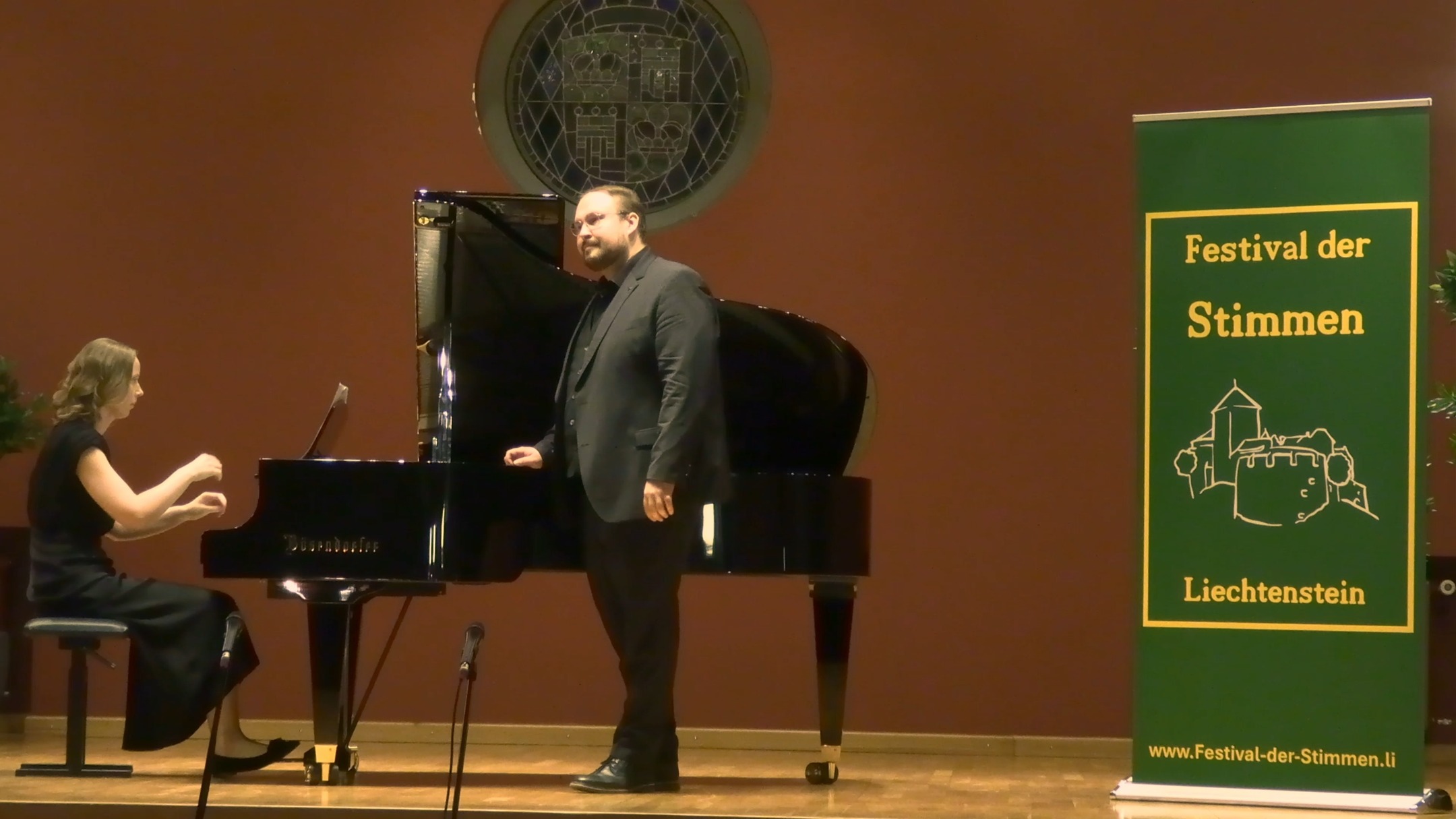
Winterreise by Franz Schubert is part of Evgenia Fölsche’s song repertoire and is regularly performed in collaboration with renowned singers. Concert programs can be designed flexibly and adapted to different vocal settings.
Evgenia Fölsche has collaborated, among others, with singers such as Johannes Kammler, Matthias Lika and Johann Kristinsson, who include Winterreise in their repertoire.
Send Concert InquiryReception, Discography & Impact
From Schubert’s circle of friends to present-day concert programs: Winterreise is both touchstone and pilgrimage. The fact that the cycle ends openly explains its enduring power: each generation hears its own present in it.
Frequently Asked Questions about “Winterreise”
Click on a question to reveal the answer.
Which four background essays are available on Winterreise?
How is the cycle structured?
24 songs; historically published in two parts (12 + 12). Part I: path, loss, inner overheating. Part II: disillusionment, resolve, depletion. The ending remains open in Leiermann.
For which voice type is Winterreise suitable?
For all voice types; transpositions are common and musically sensible. Expressive content takes priority over original pitch.
Evgenia Fölsche – Brief Note
Pianist Evgenia Fölsche curates on this website individual articles on all 24 songs as well as the four background essays. Begin with a song of your choice – or follow the cycle in order via the song overview.