Schubert`s Illness and Winterreise
Franz Schubert – Winterreise:
- Winterreise – Gute Nacht
- Winterreise – Die Wetterfahne
- Winterreise – Gefror’ne Thränen
- Winterreise – Erstarrung
- Winterreise – Der Lindenbaum
- Winterreise – Wasserfluth
- Winterreise – Auf dem Flusse
- Winterreise – Rückblick
- Winterreise – Irrlicht
- Winterreise – Rast
- Winterreise – Frühlingstraum
- Winterreise – Einsamkeit
- Winterreise – Die Post
- Winterreise – Der greise Kopf
- Winterreise – Die Krähe
- Winterreise – Letzte Hoffnung
- Winterreise – Im Dorfe
- Winterreise – Der stürmische Morgen
- Winterreise – Täuschung
- Winterreise – Der Wegweiser
- Winterreise – Das Wirtshaus
- Winterreise – Muth
- Winterreise – Nebensonnen
- Winterreise – Der Leiermann
Schubert’s Illness and Winterreise
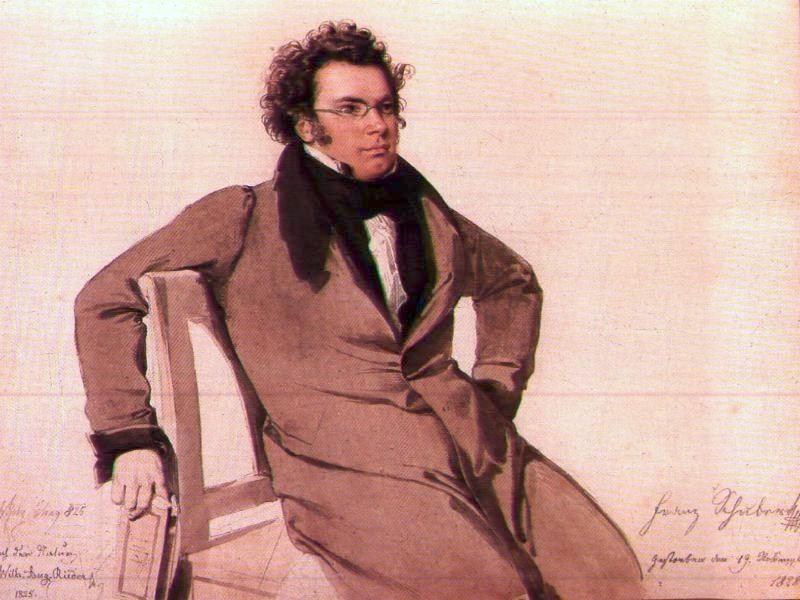
When Franz Schubert composed Winterreise, he was a young man of thirty — and at the same time already seriously chronically ill. His physical condition, his emotional burden, and his awareness of his own vulnerability form the existential background of a work that transforms the experience of exposure and abandonment into art as few others do.
The Illness – Historical Facts
From the year 1822 onward, Schubert suffered from the consequences of a syphilitic illness. Contemporary letters, diary entries by his friends, and medical notes leave no doubt that the disease took a chronic course and repeatedly led to severe symptoms in the years that followed.
The following are documented:
- recurring bouts of fever
- headaches and exhaustion
- dizziness and sleep disturbances
- periods of pronounced physical weakness
In 1827, the year in which Winterreise was composed, Schubert was already marked by this long-term illness.
Emotional Situation in the Years 1826–1828
To the physical illness was added an emotional burden arising from several factors:
- lack of a permanent position
- limited public recognition
- financial insecurity
- social dependence on his circle of friends
In letters from this period, Schubert speaks of deep despondency. Famous is his statement:
“I feel myself to be the most unhappy man in the world.”
These words date from precisely the time in which he was working on Winterreise.
Creative Intensification Despite Illness
Paradoxically, this very period was one of enormous productivity. Alongside Winterreise, piano sonatas, impromptus, chamber music, and major sacred works were created.
Friends report that Schubert worked in those months “as if in a frenzy.” For him, illness did not mean artistic paralysis, but rather an intensification of expression.
To What Extent Is Winterreise Autobiographical?
The figure of the wanderer is not a disguised self-portrait of Schubert. It remains a literary figure created by Wilhelm Müller.
Yet Schubert recognized in this figure an existential proximity: the feeling of falling out of society, of not arriving, of finding no place of security or belonging.
Contemporary witnesses report that after completing the cycle, Schubert said:
“These songs have affected me more deeply than all the others.”
This points to an identification with the inner condition of the cycle — not as biographical narrative, but as emotional resonance.
Why Is This Background Important for the Work?
Knowledge of Schubert’s life situation does not explain Winterreise, but it sharpens our perception of its existential seriousness.
Schubert composed the cycle not as an outside observer, but as someone who himself knew how fragile belonging, future, and physical security can be.
That is why the music does not feel illustrative, but necessary. Not pathos, but truth speaks from every bar.
Art Born of the Experience of Mortality
Schubert’s illness is not a Romantic myth. It is historical reality.
Yet in Winterreise, this reality did not become a lament, but a work that still touches the deepest layers of human experience today.