“Wasserflut” is song no. 6 from Franz Schubert’s Winterreise D 911 (1827), after Wilhelm Müller. After the call of memory in The Linden Tree, the gaze turns once more to the coldness of the outer world: tears fall into the snow, which “thirstily” absorbs them – pain remains visible and yet mute.
Schubert shapes a plain strophic lament in E minor, 3/4, calm in its tread and carried by a delicate yet relentless inner motion in the piano. The song shows how what had frozen begins to loosen – not as liberation, but as the continued flowing-on of suffering.
The poem (Wilhelm Müller – printed original edition 1824)
From: Winterreise – Song VI
Manche Trän’ aus meinen Augen
ist gefallen in den Schnee;
seine kalten Flocken saugen
durstig ein das heiße Weh.
Wenn die Gräser sprossen wollen,
weht daher ein lauer Wind,
und das Eis zerspringt in Schollen,
und der weiche Schnee zerrinnt.
Schnee, du weißt von meinem Sehnen;
sag’ mir, wohin geht dein Lauf?
Folge nach nur meinen Tränen –
nimmt dich bald das Bächlein auf.
Wirst mit ihm die Stadt durchziehen,
muntre Straßen ein und aus,
fühlst du meine Tränen glühen,
da ist meiner Liebsten Haus.
English translation
Many a tear from my eyes
has fallen into the snow;
its cold flakes absorb
the hot sorrow thirstily.
When the grasses begin to sprout,
a mild wind blows along,
and the ice breaks into floes,
and the soft snow melts away.
Snow, you know of my longing;
tell me, where does your course go?
Just follow my tears –
soon the little brook will take you up.
With it you will pass through the town,
in and out of lively streets;
if you feel my tears glowing,
there is my beloved’s house.
Work data & overview
- Composer: Franz Schubert (1797–1828)
- Cycle: Winterreise D 911, No. 6 (Wasserflut)
- Text source: Wilhelm Müller, Winterreise (1823/24)
- Composition: 1827; first printed edition 1828 (Part I)
- Key / metre / tempo: E minor, 3/4, slow, calmly treading
- Duration: approx. 3–4 minutes
- Scoring: voice and piano (transpositions common)
- Form: strophic
Data on the poem
- Author: Wilhelm Müller (1794–1827)
- Stanza form: 4 quatrains; cross rhyme
- Devices: antithesis (hot/cold), personification, river imagery, direct address to the snow
Genesis & cycle context
In the early arc of Winterreise, the oasis of memory in The Linden Tree is followed by a sober return to the cold. “Wasserflut” shows how the inward – tears and warmth – disappears into the outer world and at the same time passes over into motion.
In this way, the song sets in motion the motif of flowing, which is continued and psychologically sharpened in On the River. Pain here is no longer merely rigidity, but motion without redemption.
More on the relation among the early songs in the Winterreise – Overview, and on the cycle’s deeper layer in the article Winterreise as a journey into the abyss of the soul.
Performance practice & reception
Pulse & diction: a calm 3/4 tread, close to the text and without pathos. Contrasts arise through tone colour and inner temperature, not through strong tempo shifts.
Piano texture: soft inner motion as a metaphor of melting and flowing; pedal sparse and purposeful. Voice-piano timing should be set to the key words: “thirstily,” “hot,” “melts away,” “little brook.”
Historical reference interpreters
- Dietrich Fischer-Dieskau – baritone
- Hermann Prey – baritone
Current interpreters with whom I collaborate
Analysis – music
“Tears” figure & piano texture
Short, connected motions in the piano suggest drops → trickling. The line remains narrow and cool; the voice lies relatively low and syllabic, so that expression arises through restraint.
The musical motion is not illustrative in any simple sense, but carries meaning: tears are not merely named, but set into sonic flow. How such open signs function in song I describe in the background article The semiotics of song.
Form, tonal space & direction
The strophic design preserves the even tread of walking; small harmonic brightenings mark longing, darkenings in return mark reality. The ending already lays out continued motion – the motif carries forward into the next song.
Visual representation
Artistic visualisation by Evgenia Foelsche:
The snow begins to melt, and a rushing brook
streams through the village. The water carries away
the traces of winter cold
and transforms the rigid landscape into restless, moving current. The scene lies
in darkness, as though the sky were still sealed shut.
Yet a rift opens in the cloud cover. A single
ray of sunlight falls directly upon the beloved’s house
and breaks itself in its windows. The light appears almost
supernatural – as though awakening a memory
that cannot be suppressed.
The image takes up the song’s symbolism: the “flood”
stands for the wanderer’s breaking-open feelings. As
the snow melts, frozen sensations loosen,
and the inner life passes into motion. The water becomes
the bearer of his tears, his longing, his lament.
The ray of light makes the scene ambivalent.
It seems to promise hope – and yet
directs the eye back to the unattainable house.
While the water continues to flow on, the source
of the pain remains immovably in place.
Analysis – poetry
The poem “Wasserflut” consistently carries forward the motif of tears from “Frozen Tears”. The wanderer now regards his pain no longer merely as an inner state, but follows its course through the winter landscape. Tears become a medium that generates motion – but without redemption.
Tears and snow: silent disappearance
Manche Trän’ aus meinen Augen
ist gefallen in den Schnee;
seine kalten Flocken saugen
durstig ein das heiße Weh.
The first stanza binds inner suffering directly to nature. The tears fall into the snow and are absorbed by it. The image is bitter: the pain leaves no visible trace. The cold environment does not erase it, but makes it invisible.
Spring as mere possibility
Wenn die Gräser sprossen wollen,
weht daher ein lauer Wind,
und das Eis zerspringt in Schollen,
und der weiche Schnee zerrinnt.
This stanza sketches an image of dissolution and motion. Yet everything stands in the conditional. Spring is no consolation, but only a possibility. Hope exists here as thought, not as experienced reality.
The desire for direction
Schnee, du weißt von meinem Sehnen;
sag’ mir, wohin geht dein Lauf?
Folge nach nur meinen Tränen –
nimmt dich bald das Bächlein auf.
The wanderer addresses the snow directly. He seeks orientation, a direction for his longing. The tears are to form a trace that can be followed. Yet the image tips: the meltwater is taken up by the brook. The individual dissolves into the flow.
The stream of tears leads to the beloved
Wirst mit ihm die Stadt durchziehen,
muntre Straßen ein und aus,
fühlst du meine Tränen glühen,
da ist meiner Liebsten Haus.
In the final stanza, the water’s motion receives a concrete direction. The brook runs through the town, through lively streets – into the world from which the wanderer is excluded. The tears still “glow”; every path of pain leads back to her.
“Wasserflut” shows a pain that flows, yet does not pass away. The tears are in motion, but they do not carry the wanderer onward – inwardly they lead him again and again back to the same place.
Meaning & effect within the cycle
Within Winterreise, “Wasserflut” marks an important stage of development: the wanderer realizes that even motion brings no solution if inwardly it remains bound. Pain is no longer frozen, but flowing – and precisely therein lies its hopelessness.
The song binds natural motion and memory into a closed inner logic. The world takes up the tears, yet does not lead them into the future, but back to the beloved.
Precisely because the song keeps this motion open, it continues to work. More on this in the article Art that keeps working.
Evgenia Fölsche – performances & audio
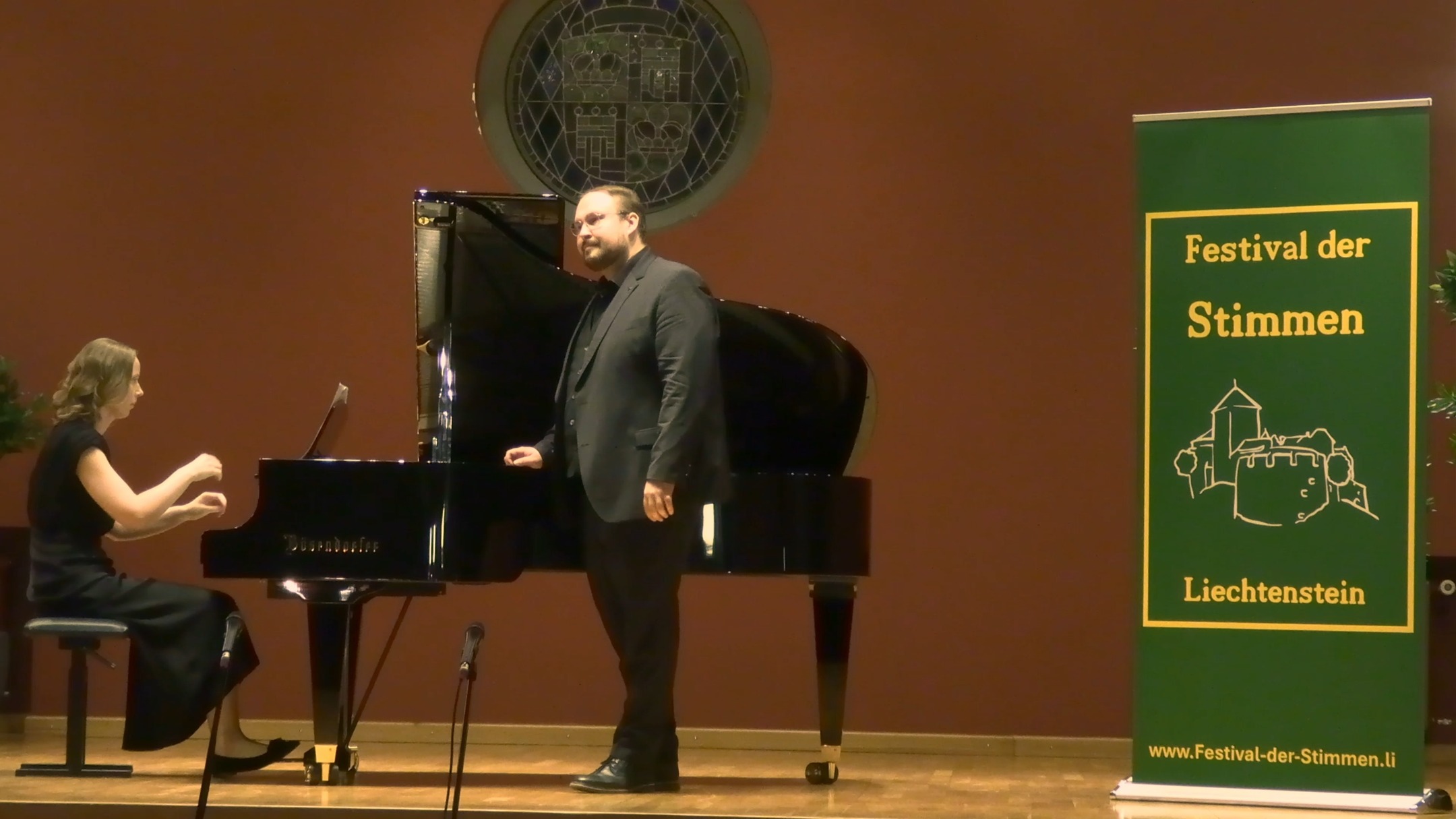
Pianist Evgenia Fölsche shapes the song as a quiet flowing: elastic 3/4 pulse, fine word accents, restrained pedal. The sound remains muted – as though warmth were to disappear at once in the cold medium.
Listening example: Wasserfluth with Dietrich Fischer-Dieskau and Gerald Moore
Winterreise for your concert programme
Franz Schubert’s Winterreise belongs to Evgenia Fölsche’s lied repertoire and can be realised in different performance formats. Depending on occasion, venue, and artistic concept, various scorings and forms are possible.
Possible formats include performances with different voice types from soprano to bass, versions with choir, with images, or in staged form. An overview of formats, scorings, and artistic possibilities can be found on the concert page for Winterreise.
Go to the Winterreise concert pageFrequently asked questions about Schubert: “Wasserflut” (Winterreise No. 6)
Click on a question to reveal the answer.
How is the form structured?
Strophic – the effect arises from colour, articulation, and harmony rather than from formal breaks.
Original key and metre?
E minor in 3/4; transpositions are common.
How can the character of “flow” be rendered in sound?
Through soft inner motion in the piano, calm pulse, sparse pedal, and text-sensitive word accents such as “melts away” or “little brook.”