“Auf dem Flusse” is song no. 7 from Franz Schubert’s Winterreise D 911 (1827), after Wilhelm Müller. The wanderer stands beside the frozen brook: what once rustled merrily now lies mute and rigid — the surface is frozen, yet beneath it something continues to swell.
Schubert shapes a recitative-like dramatic scene in E minor with “ice-crust” chords in the piano: a pause between a ritual of memory, the carving of name and date, and oppressive self-recognition. It is precisely the outward stillness that makes the inner motion all the more threateningly audible.
The poem (Wilhelm Müller – printed original edition 1824) with Franz Schubert’s alterations
From: Winterreise – Song VII
Der du so lustig rauschtest,
du heller, wilder Fluss,
wie still bist du geworden,
gibst keinen Scheidegruß.
Mit harter, starrer Rinde
hast du dich überdeckt,
liegst kalt und unbeweglich
im Sande hingestreckt.
(Schubert: im Sande ausgestreckt.)
In deine Decke grab’ ich
mit einem spitzen Stein
den Namen meiner Liebsten
und Stund’ und Tag hinein:
Den Tag des ersten Grußes,
den Tag, an dem ich ging;
um Namen und Zahlen windet
sich ein zerbroch’ner Ring.
Mein Herz, in diesem Bache
erkennst du nun dein Bild?
Ob’s unter seiner Rinde
wohl auch so reißend schwillt?
English translation
You who once rustled so merrily,
you bright, wild river,
how still you have become,
giving no farewell greeting.
With a hard, rigid crust
you have covered yourself over,
lying cold and motionless,
stretched out in the sand.
(Schubert: stretched out in the sand.)
Into your covering I carve,
with a pointed stone,
the name of my beloved
and the hour and the day:
The day of the first greeting,
the day on which I went away;
around names and numbers
winds a broken ring.
My heart, in this brook
do you now recognize your image?
Whether beneath its crust
it too swells so violently?
Orthography gently modernized; Schubert’s reading “im Sande ausgestreckt” noted.
Work data & overview
- Composer: Franz Schubert (1797–1828)
- Cycle: Winterreise D 911, No. 7 (Auf dem Flusse)
- Text source: Wilhelm Müller, Winterreise (1823/24)
- Composition: 1827; first printed edition 1828 (Part I)
- Key / metre / tempo: E minor, 4/4, moderate, sustained
- Duration: approx. 3–4 minutes
- Scoring: voice and piano (transpositions common)
- Form: through-composed; contrasting sections (description → ritual → self-reflection)
Data on the poem
- Author: Wilhelm Müller (1794–1827)
- Stanza form: 5 stanzas of 4 lines; cross rhyme
- Devices: personification, symbolism (ice crust / undercurrent), ritual action, metaphor of the “broken ring”
Genesis & cycle context
After “Flood of Tears”, the motif of flowing is psychologized: the frozen brook mirrors a heart frozen outwardly, yet inwardly still pressing on. For a moment the song brings the wanderer to a halt — not to calm him, but to make the inner tension more visible.
With the carving of name, date, and sign into the ice cover, a counter-memory is created: a personal chronicle of parting, written into a frozen surface. Memory here is not narrated, but ritually inscribed.
More on the overall context in the Winterreise – Overview and on the psychological deepening in the article Winterreise as a journey into the abyss of the soul.
Performance practice & reception
Gesture: narrative, gathered, with clear recitative lines and brief surges. The carving passage may sound focused and bodily near — without pathos, more like a cold record.
Piano texture: broad, sustained chords as ice crust; sparing pedalling, so that the rigidity remains audible. Small inner crescendos at “swells” and “violently” trace the hidden undercurrent.
Historical reference interpreters
- Dietrich Fischer-Dieskau – baritone
- Hermann Prey – baritone
Current interpreters with whom I collaborate
Analysis – music
“Ice crust” & recitative gesture
The piano lays down a sustained carpet of chords — sonically as unmoving as ice. Above it the voice declaims in recitative style; the few melodic swellings show that beneath the surface something still presses onward.
It is precisely this tension between static surface and inward pressure that gives the song its semiotic force: the musical surface does not mean peace, but concealment. More on this in the background article The semiotics of song.
Form, tonal space & ritual
The through-composed form falls into three fields: description of the frozen river, the carving ritual, and finally self-recognition. The ending lets movement beneath the surface be sensed, without release and without solution.
Visual representation
Artistic visualisation by Evgenia Foelsche:
The wanderer stands at the edge of a frozen brook. The surface
appears hard and rigid, crossed by cracks, as though the cold
had brought all movement to a halt. Yet beneath the brittle
sheet of ice a red current is visible — hot as blood,
flowing on without cease.
The image condenses the song’s central symbolism:
what outwardly appears frozen still harbours movement and heat within.
The brook becomes a mirror of the wanderer’s soul.
His feelings seem frozen, enclosed in winter rigidity —
and yet beneath the surface there still pulses a passionate,
painful memory.
In Schubert’s setting, calm and inward agitation encounter one another:
the even motion in the piano evokes the hidden current,
while the vocal line describes the engraving of words into the ice —
a desperate attempt to give form to pain.
In the image too, the moment appears frozen,
and yet the tension is palpable.
The cracked sheet of ice thus becomes an image of a fragile façade.
Beneath it flows the “hot blood” — memory, love, hurt.
The wanderer is looking not only at a brook,
but at his own interior.
Analysis – poetry
The poem “Auf dem Flusse” shows a moment of radical rigidity: not only nature is frozen over, the self too seems covered, chilled, apparently unmoving — and yet something violent continues to work beneath. The river becomes a mirror of the inner self: what is still outside may swell all the more within.
From living murmur to mute rigidity
Der du so lustig rauschtest,
du heller, wilder Fluss,
wie still bist du geworden,
gibst keinen Scheidegruß.
Right at the outset, the hard contrast appears: once “merry,” “bright,” and “wild,” now suddenly “still.” The river appears like a person who at parting would at least give some sign — but it refuses even that. In this way nature mirrors the wanderer’s situation: there was no real closure.
The cover of cold: protection, prison, repression
Mit harter, starrer Rinde
hast du dich überdeckt,
liegst kalt und unbeweglich
im Sande ausgestreckt.
The river now bears a “bark” like a tree: an image of hardening and estrangement. The water has not disappeared, but has been covered over. Thus the ice crust becomes a powerful image of psychic repression: rigidity here is both protection and prison.
Carving memory
In deine Decke grab’ ich
mit einem spitzen Stein
den Namen meiner Liebsten
und Stund’ und Tag hinein:
The wanderer responds actively: he carves into the frozen surface. This is a desperate attempt to make memory visible and datable. He writes not on paper, but in ice — that is, into a material that is itself unstable and perishable.
The broken ring
Den Tag des ersten Grußes,
den Tag, an dem ich ging;
um Namen und Zahlen windet
sich ein zerbroch’ner Ring.
Two days are enough: beginning and end. The broken ring symbolizes the dissolution of bond and fidelity. It does not merely lie beside them, but winds around names and dates — as though memory and rupture were inseparably knotted together.
The river as mirror of the heart
Mein Herz, in diesem Bache
erkennst du nun dein Bild?
Ob’s unter seiner Rinde
wohl auch so reißend schwillt?
At the end, the river becomes a mirror image of the heart itself. Rigidity is not the opposite of motion, but its concealment. Beneath the surface, something continues to swell, without being able to break forth. The poem therefore ends not in calm, but in tense uncertainty.
“Auf dem Flusse” shows rigidity as a state that carries violence within it. The ice is not peace, but a thin cover over an unresolved interior.
Meaning & effect within the cycle
Within Winterreise, “Auf dem Flusse” is a key piece for the motif of concealed emotion. Outwardly, both nature and wanderer appear increasingly motionless, yet this very immobility is the expression of an inward intensification.
The scene at the frozen river transforms memory into a visible sign and makes pain legible — as an inscription in ice. At the same time, the song shifts the gaze from the past to the present state of the inner self: not only is love lost, the heart too is in a condition that may tip over at any moment.
Precisely because the song keeps this tension open, it continues to work. More on this in the article Art that keeps working.
Evgenia Fölsche – performances & audio
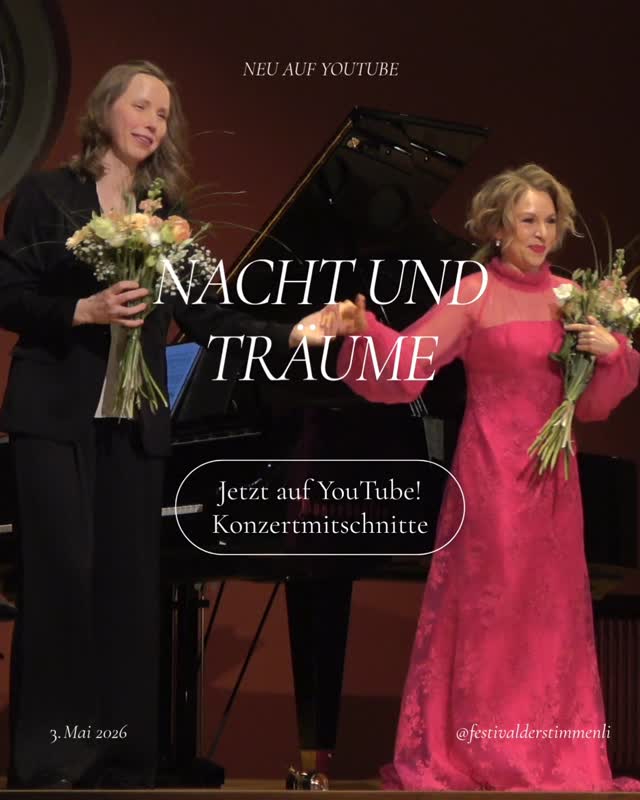
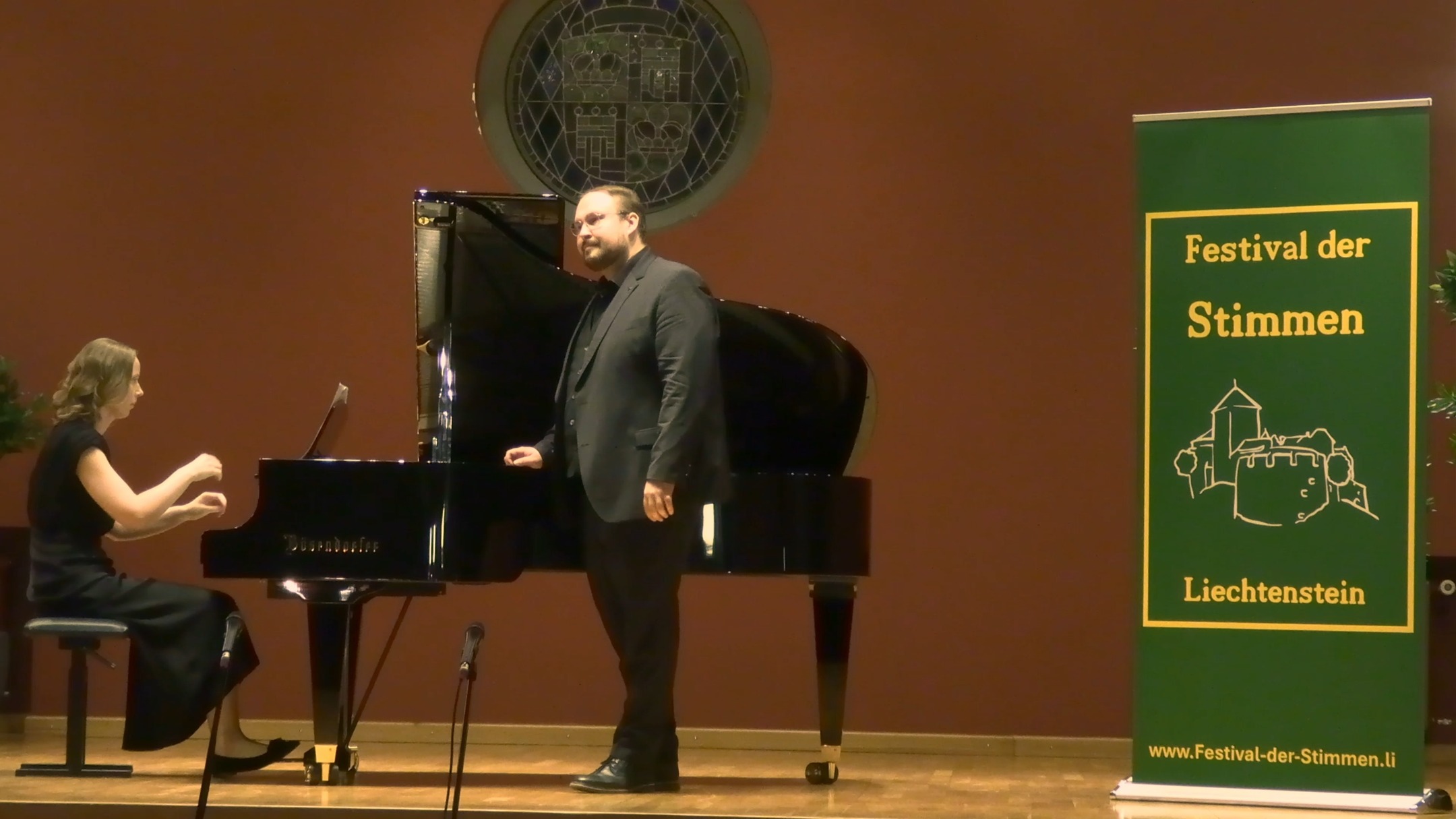
Pianist Evgenia Fölsche reads the song as a cold record under inner pressure: firm, resting chords, speech-close vocal line, fine crescendo impulses at the turning words “swells” and “violently.” The ritual remains matter-of-fact — and precisely for that reason moving.
Listening example: Auf dem Flusse with Dietrich Fischer-Dieskau and Gerald Moore
Winterreise for your concert programme
Franz Schubert’s Winterreise belongs to Evgenia Fölsche’s lied repertoire and can be realised in different performance formats. Depending on occasion, venue, and artistic concept, various scorings and forms are possible.
Possible formats include performances with different voice types from soprano to bass, versions with choir, with images, or in staged form. An overview of formats, scorings, and artistic possibilities can be found on the concert page for Winterreise.
Go to the Winterreise concert pageFrequently asked questions about Schubert: “Auf dem Flusse” (Winterreise No. 7)
Click on a question to reveal the answer.
Is “Auf dem Flusse” strophic?
No, the setting is through-composed; the sections follow the course of the text from description through ritual to self-reflection.
How does the “ice crust” sound in the piano?
Through sustained or repeated chords with sparing pedalling — as motionless, broad-surfaced, and cool as possible.
What does the “broken ring” mean?
It symbolizes the dissolution of bond and fidelity — as a counter-sign to the inscription of name and date.