“Der greise Kopf” is song no. 14 from Franz Schubert’s Winterreise D 911 (1827), after Wilhelm Müller. After the outer stimulus of The Post, the gaze slows once more: frost turns the hair white, and for a moment old age appears like a release.
Schubert designs a plainly strophic inner scene in C minor, 3/4, slow, calm. Outwardly, the song seems still. Yet beneath that calm lies one of the cycle’s bitterest insights: even old age is conceived here not as maturity, but as a longed-for ending.
The poem (Wilhelm Müller – from the printed original edition of 1824) with Schubert’s alteration
From: Winterreise – Song XIV
Der Reif hatt’ einen weißen Schein
mir über’s Haar gestreuet.
da meint’ ich schon ein Greis zu sein,
(Schubert: da glaubt’ ich schon ein Greis zu sein,)
und hab’ mich sehr gefreuet.
The frost had strewn a white sheen
all over my hair.
Then I thought myself already an old man,
(Schubert: then I believed myself already an old man,)
and was greatly delighted.
Doch bald ist er hinweggethaut,
hab’ wieder schwarze Haare,
dass mir’s vor meiner Jugend graut –
wie weit noch bis zur Bahre!
But soon it melted away;
I had black hair again,
so that I shudder at my youth—
how far still to the bier!
Vom Abendroth zum Morgenlicht
ward mancher Kopf zum Greise.
Wer glaubt’s? Und meiner ward es nicht
auf dieser ganzen Reise!
From evening red to morning light
many a head turned grey.
Who would believe it? Yet mine did not
on this entire journey!
Work data & overview
- Composer: Franz Schubert (1797–1828)
- Cycle: Winterreise D 911, No. 14 (Der greise Kopf)
- Text source: Wilhelm Müller, Winterreise (1823/24)
- Composition: 1827; first print 1828 (Part II)
- Tonal space / metre / tempo: C minor, 3/4, slow, calm
- Duration: approx. 2:30–3:30 minutes
- Scoring: Voice and piano (transpositions common)
- Form: plain strophic form with subtle variants
Data on the poem
- Author: Wilhelm Müller (1794–1827)
- Stanza form: 3 five-line stanzas
- Devices: allegory of age and frost, antithesis of white and black, vanitas trace, rhetorical question, bitter irony
Genesis & cycle context
After the outer signal of The Post, perception turns inward once more. Der greise Kopf belongs among those songs in which the winter landscape becomes ever more clearly a projection surface of consciousness. The frost upon the hair is not merely a natural phenomenon, but a sign that the wanderer at once interprets existentially.
The song thus stands at the beginning of a darker chain within the cycle: old age, delusion, weariness, nearness to death and self-estrangement draw closer together. The hope that had briefly leapt up in The Post has here already turned into an altogether different wish: not for a future, but for an end as near as possible.
More on the broader context in the Winterreise – Overview and on its psychological depth in the article Winterreise as a journey into the abyss of the soul.
Performance practice & reception
Pulse & diction: calm walking pulse in 3/4, clear syllables, no lachrymose tone. The song requires sobriety. It is precisely the plain, almost matter-of-fact presentation that makes its hardness tangible.
Piano texture: fine-grained accompanying layers, little pedal, cold colouring. Warmth may flash up only as a brief gleam—at “white,” “old man,” or “delighted.” As soon as the illusion melts, the sound must grow matte again.
Historical reference interpreters
- Dietrich Fischer-Dieskau – baritone
- Hermann Prey – baritone
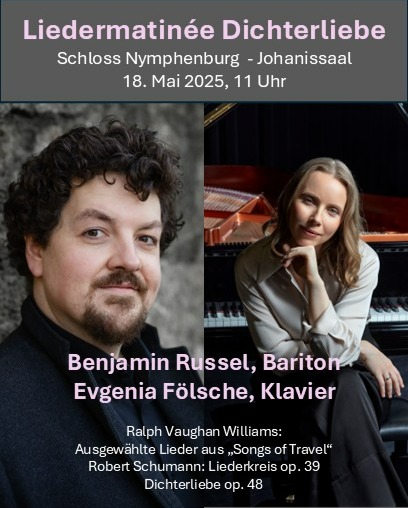
Current interpreters with whom I collaborate
Analysis – music
Image of frost & walking pulse
The beginning traces the cold whiteness in static, closely held sound-fields. The voice stays close to speech, almost as though it were merely registering an observation. Precisely through this the shock becomes greater: the joy at supposed old age sounds not pathetic, but almost sober.
Semiotically this is especially revealing: the white of the frost is neither clearly positive nor negative. It opens a field of meaning between age, release, decay and death. It is this openness of the signs that makes the song so powerful. More on this in the introductory article The semiotics of song.
Harmony, form & the figure of old age
Within the realm of C minor, brief major brightening flashes up like a deceptive promise. It marks precisely those moments in which the wanderer mistakes old age for consolation. Yet the music remains unyielding. The simple strophic form underlines precisely that there is no transformation here, but an insight that settles in place.
The song refuses any true resolution. It recognises—and remains.
Visual representation
Artistic visualisation by Evgenia Foelsche:
The wanderer leans, exhausted, against a tree.
Snow has gathered upon his head and lies across his hair like a white cap.
For a moment he seems aged, as though time had marked him in a single night.
The image takes up the song’s central symbolism:
the whiteness of the frost appears like a premature old age,
like a sign of rest and conclusion.
Yet this transformation is only temporary.
As soon as the snow melts, reality returns.
Thus the scene shows a moment between wish and insight:
the wish to be old enough to feel no more—
and the bitter recognition that suffering is by no means yet at an end.
Analysis – poetry
The poem “Der greise Kopf” belongs among the bitterest acts of self-observation in the middle section of Winterreise. In the outward sign of frost, the wanderer perceives for a moment an inward transformation. Old age appears to him not as decay, but as a longed-for nearness to the end.
Der Reif hatt’ einen weißen Schein
mir über’s Haar gestreuet.
da glaubt’ ich schon ein Greis zu sein,
und hab’ mich sehr gefreuet.
What is decisive is not only the image of white hair, but the reaction to it: the wanderer is pleased. That is the shock of the song. Old age signifies here neither wisdom nor maturity, but the hope of being nearer to escape from suffering.
Doch bald ist er hinweggethaut,
hab’ wieder schwarze Haare,
dass mir’s vor meiner Jugend graut –
wie weit noch bis zur Bahre!
The second stanza destroys this illusion. The frost melts away, and with it disappears the deceptive nearness of the end. Youth now appears not as strength, but as the prolongation of suffering. Therein lies the bitter inversion of Romantic notions: it is not old age that is feared, but youth.
Vom Abendroth zum Morgenlicht
ward mancher Kopf zum Greise.
Wer glaubt’s? Und meiner ward es nicht
auf dieser ganzen Reise!
In the final stanza, the view widens. Others grow old overnight, only the wanderer remains excluded. Even the natural progress of time seems unable to reach him. He is neither sheltered within the normal course of life nor already beyond it. It is precisely this in-between state that makes the song so uncanny.
Der greise Kopf thus shows not only nearness to death, but also a deeper form of estrangement: the wanderer loses his belonging even to the rhythm of time itself.
Meaning & effect within the cycle
Within Winterreise, Der greise Kopf marks a point of radical self-estrangement. The wanderer recognises that he is neither truly growing old nor truly coming to an end. He remains trapped in an in-between state.
Thus the journey shifts decisively out of the outer winter landscape into an existential zone. What began as a path through snow and cold now becomes ever more strongly the metaphor of an inner condition that finds no natural conclusion.
That is precisely why the song continues to work: it offers no closed image, but an open figure suspended between life, ageing and the wish for death. More on this in the article Art that continues to work.
Evgenia Fölsche – performances & audio
Pianist Evgenia Fölsche keeps the sound-image cool and grainy, the line close to speech. Brief brightenings remain deliberately fragile.
Listening example: Der greise Kopf with Dietrich Fischer-Dieskau and Gerald Moore
Winterreise for your concert programme
Winterreise by Franz Schubert belongs to Evgenia Fölsche’s lied repertoire and can be realised in different performance formats. Depending on the occasion, venue and artistic concept, various scorings and forms are possible.
Possible formats include performances with different voice types from soprano to bass, versions with choir, with images or in staged form. An overview of the formats, scorings and artistic possibilities can be found on the concert page for Winterreise.
Go to the Winterreise concert pageFrequently asked questions about Schubert: “Der greise Kopf” (Winterreise No. 14)
Click on a question to display the answer.
Is “Der greise Kopf” strophic?
Yes: a plain strophic form with discreet variations of colour and dynamics.
Which key and metre are typical?
C minor in 3/4, slow and calm; transpositions are common depending on voice type.
How does one paint the image of frost musically?
With cool, matte colours, narrow tessitura, little pedal, and only brief brightenings at “white” or “old man,” which are immediately withdrawn again.