“Bright is the Ring of Words” is the eighth song in Ralph Vaughan Williams’ Songs of Travel after Robert Louis Stevenson. It celebrates the enduring force of song: words outlive the singer, and memory becomes community. Musically, it unfolds in luminous simplicity – strophic in design, gently modal in colour, and carried by a calm 3/4 tread: bright without brilliance.
Text (Robert Louis Stevenson – Original)
From: Songs of Travel and Other Verses (1896) – No. 8
Original (English):
Bright is the ring of words
When the right man rings them,
Fair the fall of songs
When the singer sings them.
Still they are carolled and said –
On wings they are carried –
After the singer is dead
And the maker buried.
Low as the singer lies
In the field of heather,
Songs of his fashion bring
The swains together.
And when the west is red
With the sunset embers,
The lover lingers and sings,
And the maid remembers.
Text: Robert Louis Stevenson (1850–1894), public domain.
Work Data & Overview
- Composer: Ralph Vaughan Williams (1872–1958)
- Cycle: Songs of Travel – No. 8 Bright is the Ring of Words
- Tonal space / Metre / Tempo: major with modal shading, 3/4; Andante semplice
- Duration: approx. 2–3 minutes
- Form: strophic; an arched design with a quiet final line
Genesis & Cycle Context
After the homesick lament of No. 7, the cycle turns toward a praise of art: songs as a lasting trace. Positioned just before the epilogue, the piece opens the wanderer’s personal experience toward the timeless life of singing.
Performance Practice & Reception
Voice: simple, narrative, and clear in tone. Refrain-like moments should not be made grand, but quietly radiant.
Piano: a sustaining triple motion, economical pedalling; the text remains in front, harmony acts as light.
Reception: Often chosen as an encore; it unites the nearness of folksong with elegiac warmth.
Reference Recordings (Selection)
- Gerald Finley – Julius Drake
- Roderick Williams – Iain Burnside
- Sir Thomas Allen – Roger Vignoles
- Bryn Terfel – Malcolm Martineau
Analysis – Music
A strophic melody in a calm 3/4 measure, with gentle brightenings; modal turns keep pathos at bay. The closing lines subside into quietness: not triumph, but remembrance.
Visual Representation
Artistic visualisation by Evgenia Fölsche:
A wanderer sits among the heather on an ارتفاع and looks out over a
wide landscape suffused with red evening light. In his hands he holds
a stringed instrument; at his feet lie open sheets of music. Above him,
a luminous current of musical signs rises into the sky, as though song
and word were loosening themselves from the earthly scene and being
carried into the distance.
In this way, the image renders the song’s central idea with particular
clarity. Stevenson’s text speaks of words and songs that continue to be
borne onward even when singer and maker are long gone. The ascending
notes make this afterlife of art visible: sound does not remain with
the individual person, but passes beyond him. What has once been sung
is carried out into the world and continues to live in other voices
and memories.
Especially apt is the union of solitary figure and wide landscape.
The singer is clearly recognisable as an individual human being, yet
the music detaches itself from him and fills the space around him.
What the poem articulates becomes visible here: song belongs first to
the singer, but it acquires a duration of its own beyond him. The scene
of music-making is therefore not merely a momentary image, but a symbol
of the transformation of a passing instant into something enduring.
The evening light, too, is particularly fitting to the song’s meaning.
The red western sky recalls the final stanza, in which the lover sings
in the glow of sunset and the beloved remembers. Thus the image binds
together the theme of passing away with that of continued presence:
the day draws toward its end, yet precisely in this dusk the song gains
its lasting force.
Musically, the visualisation corresponds closely to the stance of the
song. Vaughan Williams shapes the vocal line not as a pathetic outburst,
but as a quietly flowing, clear, and inwardly gathered movement.
The music carries the thought that word and sound reach beyond the
single moment. Just as the glowing notes rise above the singer in the
picture, so the setting itself lifts the song from the personal toward
the universal: from an individual utterance, it becomes memory,
fellowship, and continuation.
The image thus becomes a poetic reading of the song. It shows not only
a musician in the landscape, but the force of art itself: words and
melodies rise out of mortal life, are carried onward, and remain present
even when the singer has long fallen silent.
Analysis – Poetry
“Bright Is the Ring of Words” is a poetic meditation on the endurance of art. At its centre lies the idea that words and songs survive their origin: the singer may die, the maker be buried, yet the song remains active in the world. Unlike the earlier poems of the cycle, the focus here is not on wandering, love, or the loss of home, but on what endures of human expression. The poem thus takes on an almost epigrammatic quality: in concentrated form, it unfolds a reflection on language, song, and memory.
The force of the rightly sounded word
Bright is the ring of words
When the right man rings them,
Fair the fall of songs
When the singer sings them.
From the opening lines onward, the poem celebrates the vitality of verbal and musical utterance. Words are not simply spoken; they are made to ring. The phrase “when the right man rings them” makes clear that language reaches its full beauty only when embodied by the right presence. It is not the word alone, but its living articulation through the human being, that grants it brightness.
The same is true of song. It “falls” beautifully when the singer sings it. This phrase suggests singing not as a dramatic outburst, but as something natural, flowing, and measured. Already here, the poem’s essential thought comes into view: art arises from the union of form and embodiment. The word needs the one who speaks it; the song needs the one who sings it. That is precisely why its later endurance becomes all the more significant.
The song outlives its maker
Still they are carolled and said –
On wings they are carried –
After the singer is dead
And the maker buried.
The poem’s second movement leads from the moment of performance to the duration of transmission. Words and songs continue to be spoken and sung even when their creators are long dead. The image of their being carried “on wings” lends this endurance something light and free. Art does not spread ponderously, but almost of itself, with an organic ease.
Particularly striking is the clear distinction between the singer and the “maker”. The poem therefore embraces both the performing voice and the creative poet or composer. Both pass away, yet the work remains. In this lies a truth at once consoling and unsentimental: the human person is mortal, but expression may continue to live within the community.
Art as a force of fellowship among the living
Low as the singer lies
In the field of heather,
Songs of his fashion bring
The swains together.
The third stanza deepens the thought of endurance by showing how songs continue to work within the world. The singer lies low in the heather field, buried in the earth and belonging to what has passed. Yet from there, “songs of his fashion” still bring people together. Song becomes a social force: it creates fellowship although its originator no longer lives.
The “swains” – simple country folk or lovers – evoke a horizon close to folksong. Art appears here not as the exclusive possession of a cultivated few, but as something circulating among people and joining them together. This accords especially well with the context of Songs of Travel, where song repeatedly appears as the expression of shared human experience.
Memory in the red of evening
And when the west is red
With the sunset embers,
The lover lingers and sings,
And the maid remembers.
The final stanza carries the song’s effect into an especially tender and intimate scene. The west glows red in the evening light, and within this atmosphere of transition the lover lingers and sings. Opposite his song stands the beloved’s remembering. The song therefore creates not only general fellowship, but a personal bond between two human beings.
At the same time, the poem acquires a gently melancholic colouring. The evening, with its “sunset embers”, is an image of transience, though not of abrupt ending. In this twilight the song continues, and with it memory. Art appears, then, as a way not of abolishing mortality, but of transforming it into something enduring. It is precisely in remembrance that its deepest power becomes evident.
Simple form, universal reach
After the singer is dead
And the maker buried.
The poem’s effect depends in large part on its simplicity. It develops no elaborate argument, but states its insight through clear, song-like images. That very simplicity gives it a universal quality. The poem speaks not only about one particular song or singer, but about the elemental experience that human expression can exceed the limits of an individual life.
“Bright Is the Ring of Words” is thus a poem about the afterlife of art. Words and songs are understood as things that arise out of the moment, yet do not perish with it. The singer dies, the maker is buried, but the work remains present in voices, memories, and human fellowship. It is precisely in this union of simplicity and depth that the poem achieves its particular radiance.
Meaning & Effect
At the heart of the poem lies the idea that art outlasts the individual. Words and songs are bound at first to the one who speaks or sings them, yet they detach themselves from their origin and continue to live in the memory of others. The poem thus shows that human expression is not merely fleeting, but capable of creating fellowship and bridging time.
Its effect lies in its concentrated and luminous imagery. Heather field, red western sky, lingering lover, and remembering maid create an atmosphere of stillness, warmth, and quiet duration. “Bright Is the Ring of Words” is therefore not celebratory in a grandiose sense, but clear, contemplative, and inwardly poised. Within the cycle, it stands like a poetic act of self-recognition: what remains of the wanderer is neither possession nor place, but the song that is carried onward.
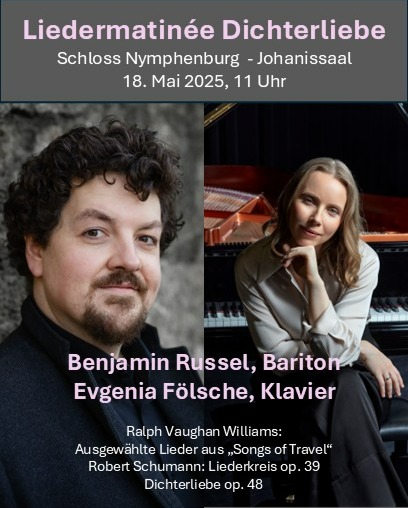
Evgenia Fölsche – Performances & Audio
A simple line, a quiet radiance; the final stanza should feel almost sung speech rather than broad cantabile. The piano leaves space – silence is part of the music.
FAQ – “Bright is the Ring of Words”
Click on a question to reveal the answer.
Is the song strophic?
Yes – clearly strophic, with only slight variations of dynamic and colour.
Piano or orchestra?
Both versions are in use; the piano version feels more intimate, while the orchestral one is more pastoral in colour.