“Das Wandern” opens Franz Schubert’s song cycle Die schöne Müllerin D 795 (1823), based on poems by Wilhelm Müller. In five short stanzas, wandering is celebrated as a principle of life—learned from the water, the wheels, and even the stones themselves. Schubert shapes this into a folk-like, strophic signal of departure, driven by the tireless 6/8 flow in the piano.
The Verse (Wilhelm Müller – Seventy-Seven Poems from the Posthumous Papers of a Traveling French Horn Player, 1821)
From: Die schöne Müllerin – cycle “Wanderschaft”
Wandering is the miller’s delight,
Wandering!
He must be a poor miller indeed,
Who never thought of wandering,
Wandering.
We learned it from the water,
From the water!
It never rests by day or night,
It is always intent on wandering,
The water.
We can see it from the wheels as well,
The wheels!
They do not like to stand still,
They spin all day without growing tired,
The wheels.
Even the stones themselves, heavy as they are,
The stones!
They dance along in cheerful rows
And would gladly go even faster,
The stones.
O wandering, wandering, my delight,
O wandering!
Master and mistress,
Let me go on my way in peace
And wander.
Work Data & Overview
- Composer: Franz Schubert (1797–1828)
- Cycle: Die schöne Müllerin D 795, No. 1 (opening song)
- Text source: Wilhelm Müller, poem “Wanderschaft” (cycle Die schöne Müllerin)
- Composition: October 1823; first print 1824 (Booklet 1)
- Original key: B-flat major; Meter/character: 6/8, lively
- Duration: approx. 2:30–3:00 minutes
- Scoring: Voice and piano (all ranges via transposition)
- Form: strictly strophic (5 stanzas)
Data on the Poem
- Author: Wilhelm Müller (1794–1827)
- First publication (text): 1821 as “Wanderschaft” in the cycle Die schöne Müllerin
- Stanza form: 5 stanzas of 5 lines each
- Devices: personification (water/wheels/stones), anaphora, refrain formula, enumeratio
Origins & Cycle Context
With “Das Wandern”, Schubert establishes the basic pulse of the entire Die schöne Müllerin: motion, forward drive, the brook as the carrier of the narrative. Its folk-song-like profile (memorable melody, clear periodic phrasing) creates immediate recognizability—and forms the contrasting backdrop for the psychological deepening of the songs that follow.
More about the cycle (content, work data, all song articles) can be found on the overview page: Die schöne Müllerin – Overview.
Performance Practice & Reception
Tempo & pulse: Lively and buoyant, but never rushed. The piano bass traces the steady flow of the brook (6/8 arpeggios), while the right hand articulates the walking step. Textual clarity takes precedence over sheer volume; consonants should be clear, vowels lean and focused.
Stanza colors: 1 (programmatic statement) – neutral; 2 (water) – smoother legato arc; 3 (wheels) – lightly pointed accents; 4 (stones) – dancing lightness; 5 (address to the miller couple) – a touch of supplication rather than triumph.
Reference Recordings (Selection)
- Dietrich Fischer-Dieskau – Gerald Moore (DG)
- Ian Bostridge – Mitsuko Uchida (Decca)
- Christoph Prégardien – Andreas Staier (fortepiano; harmonia mundi)
- Fritz Wunderlich – Hubert Giesen (Orfeo)
- Matthias Goerne – Eschenbach / Brendel (various)
Analysis – Music
6/8 Motion & “Brook” Figure
The tireless piano arpeggios (mostly in the bass) sketch the brook’s flowing movement; they become a leitmotif of the cycle. Above this current of motion lies a syllabic melody, lightly contoured in a yodel-like manner—folk-like, yet artfully balanced.
Strophic Form & Word-Painting
Stanza 2 (water) takes on more legato and line; stanza 3 (wheels) gains small accent peaks on “stille steh’n” / “müde dreh’n”; stanza 4 (stones) may sparkle with a buoyant, dancing character. In stanza 5, the appeal to “Herr Meister und Frau Meisterin” is slightly softened dynamically—an outlook rather than an arrival.
Visual Representation
Artistic visualization by Evgenia Foelsche:
The image captures the cheerful departure of the young miller lad. At its center stands
wandering as a natural rhythm of life: the human being in motion, accompanied by
the rushing brook, turning mill wheels, and the living force of the landscape.
The picture shows neither loneliness nor stillness, but rather a forward impulse full of
expectation, lightness, and youthful confidence.
In this way, the image reflects the fundamental idea of the song: wandering here is far more
than mere movement from one place to another. It appears as an expression of inner vitality,
as a law of nature, followed equally by water, wheels, and human beings. Everything is in motion,
everything presses onward. The miller lad thus becomes part of a greater movement that leads him
not only through the world, but also toward his destiny.
Like Schubert’s music, the picture conveys a sense of rhythmic inevitability.
Its clear, dynamic composition and fresh atmosphere mirror the buoyant momentum of the
song. No shadow yet falls across the path; rather, this scene illuminates the beginning
of a hopeful journey. The image makes visible what resonates in music and text alike:
the joy of wandering, of seeking, and of the open, still unwritten road.
Analysis – Poetry
The poem “Das Wandern” opens the cycle Die schöne Müllerin in the section “Wanderschaft” and thereby establishes the fundamental impulse of the entire poetic work: movement as a principle of life. Unlike the existential night and farewell scenes of Winterreise, wandering is presented here not as loss, but as delight, professional ethos, and law of nature. The text is built like a song for walking along: short stanzas, repeated exclamations (“Das Wandern!”, “Vom Wasser!”), and a circling rhythmic structure that performatively enacts its subject.
Already in the first stanza, wandering is established as an identity marker of the miller:
Wandering is the miller’s delight,
Wandering!
He must be a poor miller indeed,
Who never thought of wandering,
Wandering.
The phrase “is … delight” makes wandering seem self-evident, not exceptional. Whoever does not wander is “poor” or “bad”—the judgment is less moral than normative: wandering belongs to the trade, to tradition, and to self-image. The repetition at the end of the stanza functions like a refrain and sets a circling motion in motion, already foreshadowing the turning of the mill. The speaker adopts a collective, proverb-like tone: it sounds as though an entire guild were speaking—and at the same time as though the young wanderer were impressing this guild rule upon himself.
In the second stanza, wandering is no longer derived from profession, but from nature:
We learned it from the water,
From the water!
It never rests by day or night,
It is always intent on wandering,
The water.
The water appears as the primal image of movement: it knows no “rest” and is on the move “by day and night.” In this way, wandering receives elemental legitimacy: it is not first chosen by human beings; nature itself provides the law. At the same time, the water is introduced as a central motif of the cycle: later it becomes guide, interlocutor, and mirror of inner states. Here, however, it is still wholly positive—as energy, direction, and promise.
In the third stanza, movement is concretized mechanically:
We can see it from the wheels as well,
The wheels!
They do not like to stand still,
They spin all day without growing tired,
The wheels.
The “wheels” anchor wandering in the working process of the mill. What is interesting here is the shift in perspective: wandering means not only moving onward, but also turning, circling, being driven. “Not tired” is not a psychological state, but a functional description—and precisely therein lies a quiet undertone: whoever is destined for motion cannot stand still. In this way, Müller links nature (water) and technology (wheels) into a closed system of restlessness.
The fourth stanza intensifies the principle to the point of paradox:
Even the stones themselves, heavy as they are,
The stones!
They dance along in cheerful rows
And would gladly go even faster,
The stones.
Of all things, the “heavy” stones “dance”—movement becomes joy, almost a personification. The whole world is thus imagined as moved: even what is sluggish becomes lively. At the same time, this already points ahead to the cycle’s ambivalence: millstones grind—they are working tools, but also symbols of pressure, friction, and crushing. For now, everything still sounds cheerful; later, the same mill motif can be experienced as compulsion and closed cycle.
In the final stanza, the lyrical self comes more clearly into view and directs its movement against social ties:
O wandering, wandering, my delight,
O wandering!
Master and mistress,
Let me go on my way in peace
And wander.
The double invocation (“O wandering”) sounds like a personal confession: wandering is not merely a guild slogan, but an inner need. At the same time, a concrete social order becomes visible for the first time: the master’s house, authority, belonging. The fact that the speaker asks for “peace” suggests that staying always also means subordination and limitation. The request is polite, but firm: the cycle begins with a self that wants to keep moving—and only thereby becomes open to encounter, temptation, and later failure.
Formally, the structure supports this meaning: repetitions, exclamations, and the constant return of the key word generate a kind of verbal walking rhythm. The poem sings movement into being—and makes it the condition for everything that follows.
Meaning & Effect Within the Cycle
As the opening of Die schöne Müllerin, “Das Wandern” is a programmatic beginning: it establishes wandering as a law of nature (water), as occupational mechanism (wheels, stones), and as personal delight (confessional formula). The young wanderer does not appear as one who suffers, but as one who seeks: movement here is still hope, energy, and openness to the future.
At the same time, the poem already lays out the crucial motifs of the entire cycle: the water as path and voice, the mill as the center of the coming action, and the relation between freedom (wandering) and attachment (the master’s house). The beginning stands under the sign of lightness—yet because wandering is presented as unavoidable (“never rests,” “does not like to stand still”), the possibility of later unrest is already built in. The cycle therefore begins with a bright urge toward movement, one that may gradually turn into passion, jealousy, and existential intensification.
Evgenia Fölsche – Performances & Audio
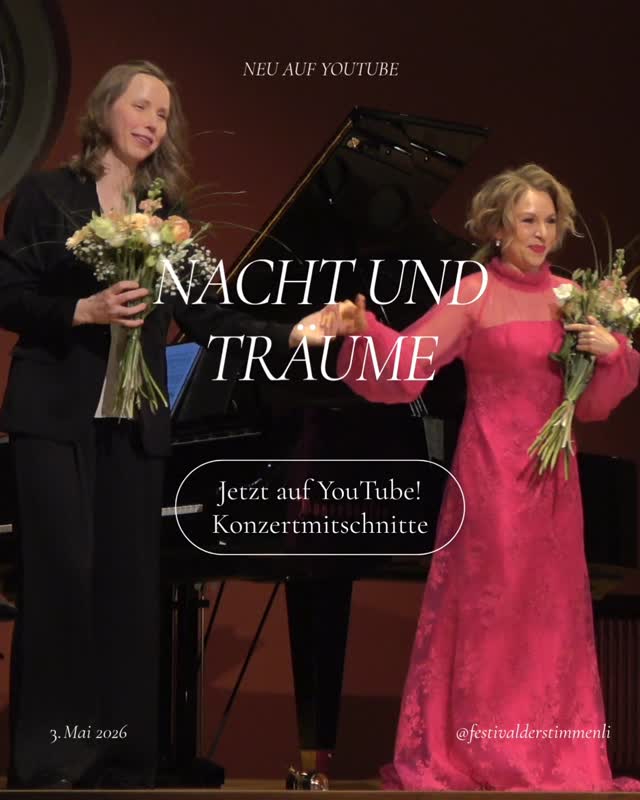
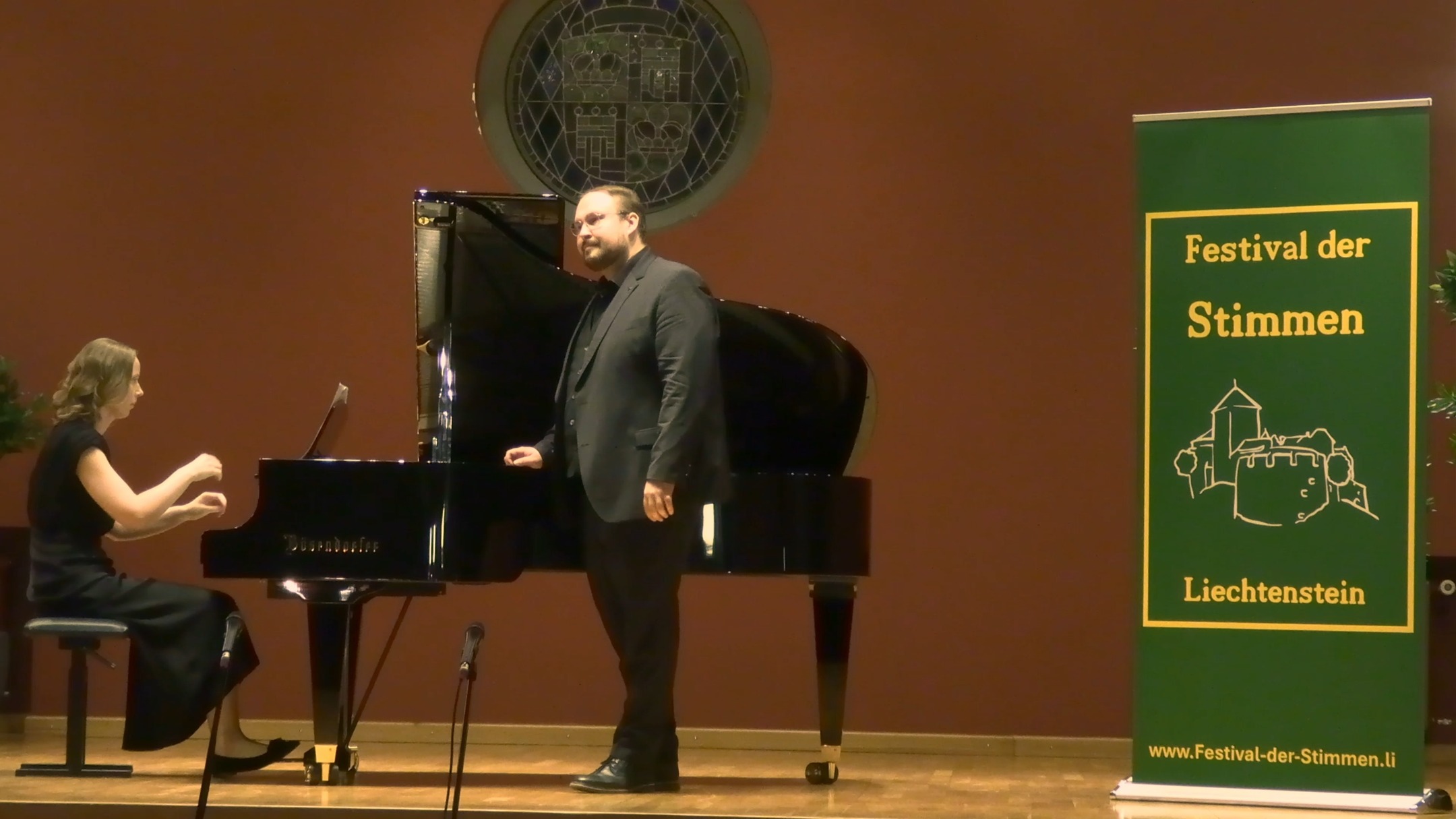
Pianist Evgenia Fölsche shapes the 6/8 step with buoyant bass and clear articulation; the stanza colors are contrasted subtly, and the ending remains open—as an invitation into the cycle’s continuing narrative.
Audio example: Das Wandern with Dietrich Fischer-Dieskau and Gerald Moore
Concert Inquiry
Die schöne Müllerin by Franz Schubert is part of Evgenia Fölsche’s song repertoire and is regularly performed in collaboration with renowned singers. Concert programs can be designed flexibly and tailored to different vocal lineups.
Among others, Evgenia Fölsche has collaborated with singers such as Johannes Kammler, Benjamin Russell and Gerrit Illenberger, who include Die schöne Müllerin in their repertoire.
Send concert inquiryFrequently Asked Questions about Schubert: “Das Wandern” (Die schöne Müllerin No. 1)
Click on a question to reveal the answer.
What function does “Das Wandern” have within the cycle?
It sets the pulse of motion and sound for the entire work: the brook as guiding figure; a mood of departure before psychological deepening.
In what key and form is the song written?
The original key is B-flat major, and the form is strictly strophic (5 stanzas), in 6/8 meter with continuous arpeggiated accompaniment.
How fast should it be performed?
Lively, but never rushed: buoyant 6/8 steps and clear diction. The flow should never lose its breath.
Are there reliable sources for text and work information?
Yes: urtext/work information and song text can be found, among others, at Schubertlied.de (key, dating, text), Oxford Song (text & translation), and LiederNet (complete text).