“Ungeduld” is Song No. 7 from Franz Schubert’s cycle Die schöne Müllerin D 795 (1823), after Wilhelm Müller. After the listening inwardness of “Der Neugierige”, feeling here breaks outward: an urgent declaration that wants to be inscribed, called out, proclaimed everywhere. Schubert responds with strophic form, driving motion, and a striking refrain arch – “Yours is my heart, and so it shall remain forever.”
The Poem (Wilhelm Müller – Seventy-Seven Poems from the Posthumous Papers of a Travelling French-Horn Player, 1821)
I’d gladly carve it into every strip of bark,
I’d gladly engrave it on every pebble stone,
I’d like to sow it on every fresh little bed
With cress seed that would quickly betray it,
On every white sheet I would like to write it:
Yours is my heart, and so it shall remain forever.
I would like to train a young starling for myself,
Until it spoke the words pure and clear,
Until it spoke them with the sound of my mouth,
With the full, hot urgency of my heart;
Then it would sing brightly through her windowpanes:
Yours is my heart, and so it shall remain forever.
I would like to breathe it into the morning winds,
I would like to whisper it through the stirring grove;
Oh, if only it shone out from every flower-star!
If only fragrance carried it to her from near and far!
You waves, can you do nothing but turn the wheels?
Yours is my heart, and so it shall remain forever.
I thought it must be written in my eyes,
One must see it burning on my cheeks,
It would be there to read upon my silent mouth,
Every breath I drew would loudly make it known to her;
And she notices nothing of all this anxious stirring:
Yours is my heart, and so it shall remain forever!
Work Data & Overview
- Composer: Franz Schubert (1797–1828)
- Cycle: Die schöne Müllerin D 795, No. 7
- Text source: Wilhelm Müller, “Ungeduld” (1821)
- Composition: October 1823; first published 1824
- Tonal area / meter: A major sphere (some editions transpose), 2/4, very lively
- Duration: approx. 2:00–2:45 minutes
- Scoring: Voice and piano (all ranges via transposition)
- Form: strictly strophic (4 stanzas with refrain formula)
Data on the Poem
- Author: Wilhelm Müller (1794–1827)
- Stanza form: 4 stanzas of 4 lines + refrain
- Devices: Anaphora (“I would like …”), hyperbole, enumeratio, refrain as guiding formula
Genesis & Cycle Context
“Ungeduld” follows as an outburst of feeling after the quiet question of “Der Neugierige”. Dramaturgically, the cycle shifts from a tone of listening to one of calling out and avowal: the journeyman wants to force his “yes” into being, with the world as witness. In this way, the song takes the first unmistakable step toward fixation and exaggeration.
More on the cycle (plot, work data, all song articles) can be found on the overview page: Die schöne Müllerin – Overview.
Performance Practice & Reception
Tempo & articulation: very lively, but elastic — no hammering. Consonants precise (without harshness), vowels sustained; the refrain line with intelligent breath management and a slight portato, so that it does not “shout”.
Stanza colours: 1 (signs in nature) – bright, forward-moving; 2 (fantasy of dissemination) – a touch lighter; 3 (starling/“bright and clear”) – small points of radiance; 4 (writing/vastness) – the broadest gesture, but dynamically controlled. Brief postlude without pathos.
Reference Recordings (selection)
- Fritz Wunderlich – Hubert Giesen (Orfeo)
- Dietrich Fischer-Dieskau – Gerald Moore (DG)
- Ian Bostridge – Mitsuko Uchida (Decca)
- Christoph Prégardien – Andreas Staier (fortepiano; harmonia mundi)
- Matthias Goerne – Christoph Eschenbach (Teldec)
Analysis – Music
Motion, Accent & Refrain Architecture
Right hand: unceasing quaver/semiquaver figures with rising and falling arches; left hand: a springing basic step. The voice is set syllabically above it — the refrain line spans a slightly “higher” arch and must be phrased intelligently so as not to be forced.
Strophic Design, Textual Drive & Postlude
Each stanza intensifies the desire for publicity (bark → wind/children → bird → writing/landscape). Schubert keeps the harmony bright and the periodic structure clear — expressivity arises from timing and accent. Brief postlude as a “taking of breath,” not a triumphant ending.
Visual Representation
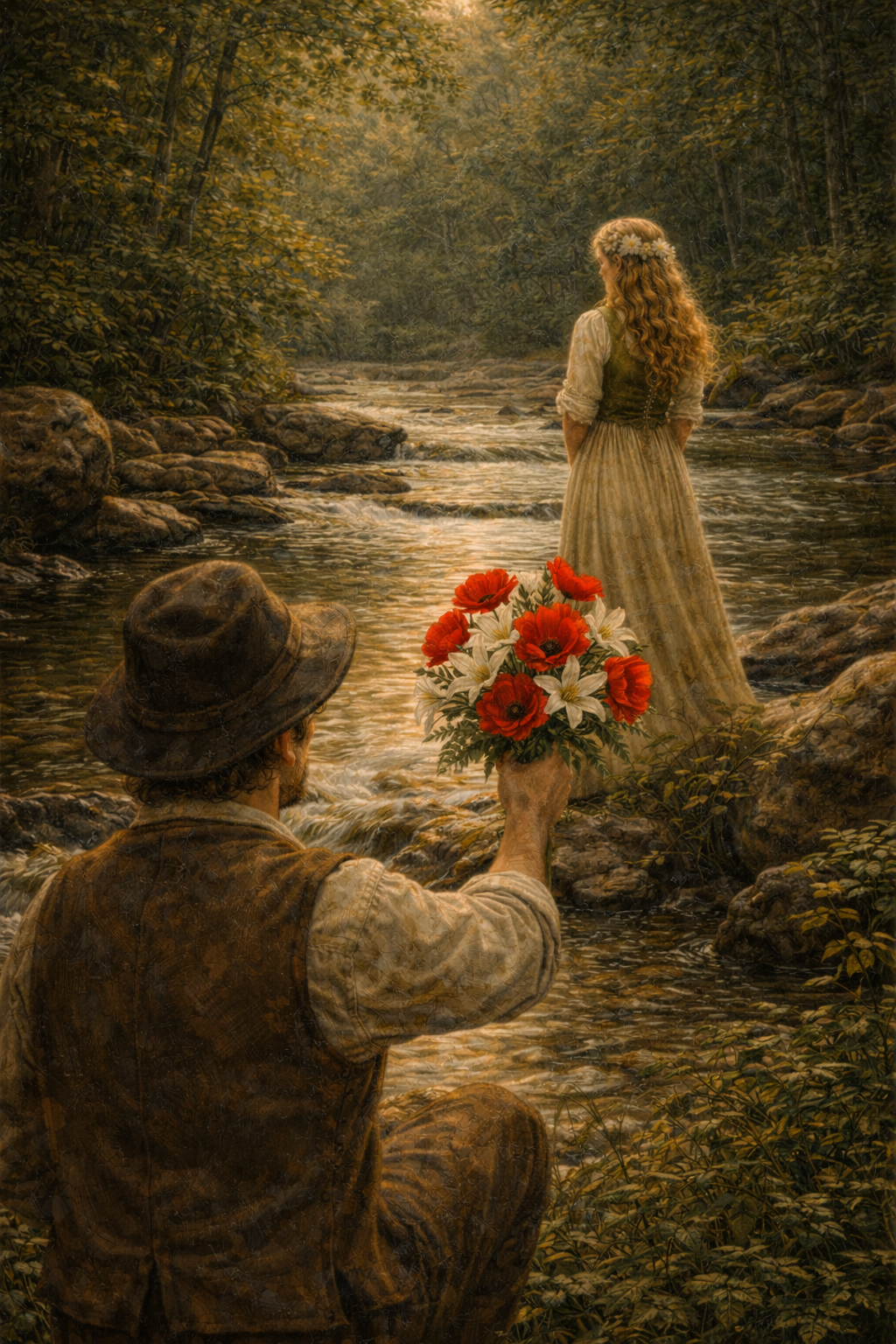
Artistic visualisation by Evgenia Fölsche:
The image shows the miller lad in a moment of passionate devotion.
He wants to offer the miller’s daughter a bouquet of red poppies and white lilies
— flowers that appear like symbols of his feeling: the red poppy as a sign
of ardent love, inner unrest and intoxicated longing, the white lilies, by contrast,
as an image of purity, hope and quiet devotion. In this gift there is concentrated
all that he can no longer hold back from her: the whole fullness of his heart.
Yet the miller’s daughter pays him no attention. It is precisely this contrast that gives the image
its true tension. What for him is of the greatest significance seems for her hardly
perceptible at all. His love presses toward expression, wants to declare itself, wants
to become visible in signs, colours and gifts — and yet it meets a beloved who
quietly withdraws from it. Thus the bouquet appears not only as a gift of love,
but also as the symbol of a feeling that is overflowing and yet reaches
into emptiness.
Like Schubert’s music, the image too stands under the sign of restless motion and
heightened inward intensity. Everything presses outward, everything wants to be spoken,
shown, inscribed. Yet the absent glance of the miller’s daughter makes visible that this
ardour finds no response. The image thus expresses what resonates in text and music:
the wish to impress love upon the whole world, and at the same time the
painful experience that the beloved person may remain untouched by it.
Analysis – Poetry
“Ungeduld” shows the wanderer in a state of burning amorous unrest. After the quiet inward question of “Der Neugierige”, everything now presses toward outward expression. The poem is an outburst — linguistically, rhythmically, and imagistically. The wanderer can no longer conceal his feeling; he wants to inscribe it into the whole world.
The first stanza unfolds a chain of wish-images:
I’d gladly carve it into every strip of bark,
I’d gladly engrave it on every pebble stone,
I’d like to sow it on every fresh little bed
With cress seed that would quickly betray it,
On every white sheet I would like to write it:
Yours is my heart, and so it shall remain forever.
The declaration of love is to be inscribed into nature itself: into bark, stone, earth, paper. The wanderer wants to carry his inner life outward, to make it visible everywhere. Nature, which previously served as interlocutor, now becomes the canvas of his self-revelation.
The second stanza intensifies this idea into the realm of animals and voice:
I would like to train a young starling for myself,
Until it spoke the words pure and clear,
Until it spoke them with the sound of my mouth,
With the full, hot urgency of my heart;
Then it would sing brightly through her windowpanes:
Yours is my heart, and so it shall remain forever.
Even a bird is to take over the voice of his heart. The boundary between inner and outer world is further dissolved: his own voice is to sound everywhere, even without his personal intervention.
In the third stanza the projection expands once more:
I would like to breathe it into the morning winds,
I would like to whisper it through the stirring grove;
Oh, if only it shone out from every flower-star!
If only fragrance carried it to her from near and far!
You waves, can you do nothing but turn the wheels?
Yours is my heart, and so it shall remain forever.
Wind, fragrance, blossoms, water — all elements are to carry the word of love. The brook, previously his trusted interlocutor, is now invoked once more: but it is no longer to turn wheels only, it is to spread the love message. The wanderer demands that the world make his feeling visible and audible.
The final stanza leads this intensification back toward self-observation:
I thought it must be written in my eyes,
One must see it burning on my cheeks,
It would be there to read upon my silent mouth,
Every breath I drew would loudly make it known to her;
And she notices nothing of all this anxious stirring:
Yours is my heart, and so it shall remain forever!
Now the projection is redirected back onto his own body. The wanderer believes that his inner life must be outwardly visible — in glance, cheeks, breath. Yet the decisive sentence is: “And she notices nothing.” The world does not see what he has placed into it. Here, for the first time, arises the painful experience of non-reciprocation.
Linguistically, the poem works with repeated subjunctives (“I would like”, “I’d gladly carve”, “I’d gladly engrave”). Everything remains wish, imagination, projection — nothing becomes reality. The returning refrain intensifies the obsessive character of this inner repetition.
Meaning & Effect within the Cycle
“Ungeduld” is the song of eruptive self-revelation. The wanderer wants to make his love inescapably visible — in nature, in the air, in his own body. Yet the miller’s daughter remains untouched by this inward storm.
In this way, the cycle shifts for the first time decisively from its harmonious beginning toward conflict: the wanderer realises that his feeling is not automatically recognised or shared from outside. The world does not reflect his projections back to him.
Psychologically, this is the moment in which quiet longing becomes urgent demand — and romantic enchantment gives way to the first experience of frustration.
Thus “Ungeduld” marks the transition from inward expectation to incipient disappointment — a decisive step on the way toward the wanderer’s later jealousy and collapse.
Evgenia Fölsche – Performances & Audio
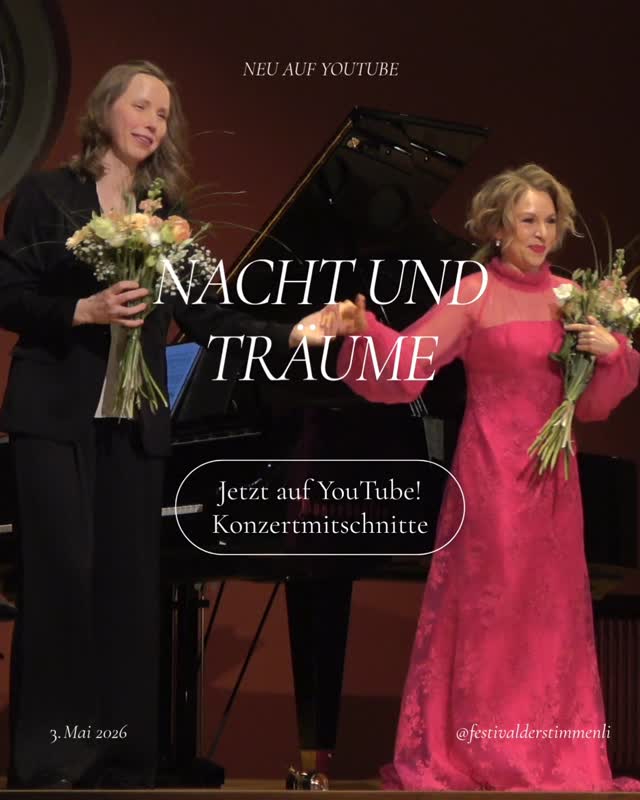
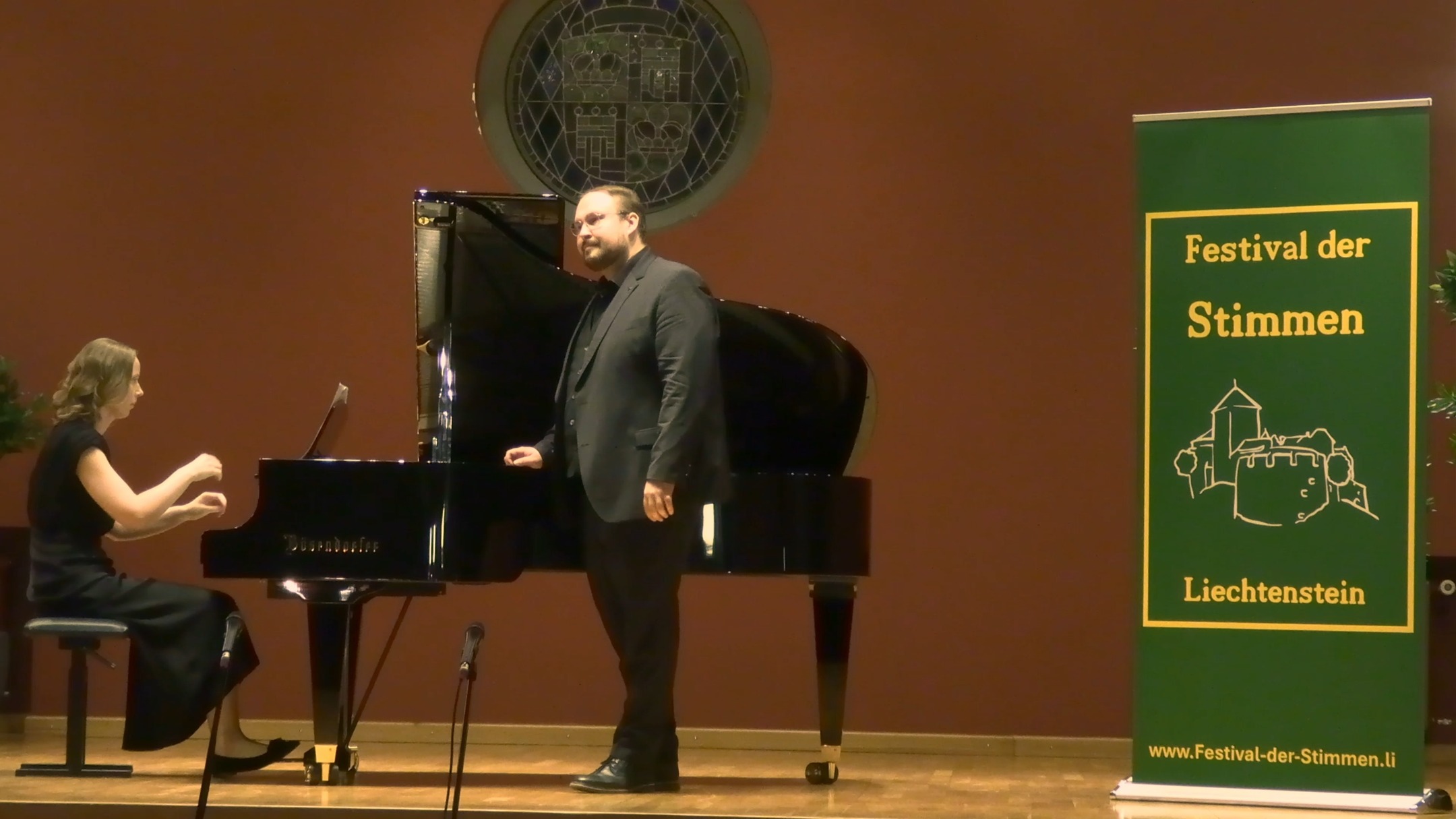
Pianist Evgenia Fölsche opts for springing motion and speaking legato: the refrain remains cantabile, never pressed; the stanzas receive subtle changes of colour rather than mere loudness.
Audio example: Ungeduld with Dietrich Fischer-Dieskau and Gerald Moore
Concert Enquiry
Die schöne Müllerin by Franz Schubert is part of Evgenia Fölsche’s song repertoire and is performed regularly in collaboration with renowned singers. Concert programmes can be arranged flexibly and adapted to different line-ups.
Evgenia Fölsche has collaborated, among others, with singers such as Johannes Kammler, Benjamin Russell and Gerrit Illenberger who have Die schöne Müllerin in their repertoire.
Send concert enquiryFrequently Asked Questions about Schubert: “Ungeduld” (Die schöne Müllerin No. 7)
Click on a question to reveal the answer.
Form & character?
Strictly strophic (4 stanzas), 2/4, very lively – driving accompanimental motion, cantabile refrain arch.
How loud may the refrain be?
Resonant, but never pressed: phrasing and breath control matter more than sheer volume; a point of radiance rather than continuous forte.
Dramaturgical function?
Outburst of feeling after inward questioning: first great avowal – starting point for increasing fixation and later hurt.
Textual variants?
Minor orthographic/punctuation variants; the central meaning and refrain formula remain constant.