“Ich kann’s nicht fassen, nicht glauben” is the third song from Robert Schumann’s cycle Frauenliebe und -leben op. 42, based on poems by Adelbert von Chamisso. After the reverent distance of the previous song, the improbable now seems to have happened: the beloved man has chosen her. The song shows a state between dream, shock, happiness, and disbelief.
The text by Adelbert von Chamisso
From: Frauenliebe und -leben
German original
Ich kann’s nicht fassen, nicht glauben,
Es hat ein Traum mich berückt;
Wie hätt’ er doch unter allen
Mich Arme erhöht und beglückt?
Mir war’s, er habe gesprochen:
„Ich bin auf ewig dein,“
Mir war’s — ich träume noch immer,
Es kann ja nimmer so sein.
O lass im Traume mich sterben,
Gewieget an seiner Brust,
Den seligen Tod mich schlürfen
In Tränen unendlicher Lust.
Direct English translation
I cannot grasp it, cannot believe it,
A dream has enchanted me;
How could he, among all others,
Have raised and made happy poor me?
It seemed to me he had spoken:
“I am yours forever,”
It seemed to me — I am still dreaming,
It surely can never be so.
O let me die in the dream,
Rocked at his breast,
Let me drink the blessed death
In tears of endless delight.
Work data & overview
- Composer: Robert Schumann (1810–1856)
- Cycle: Frauenliebe und -leben op. 42, No. 3
- Text source: Adelbert von Chamisso, Frauenliebe und -leben
- Origin of the composition: 1840
- First edition: 1843, published by Friedrich Whistling in Leipzig
- Key: C minor
- Tempo indication: Mit Leidenschaft
- Scoring: voice and piano
- Duration: approx. 1½–2 minutes
- Position in the cycle: third song; shift from humble veneration to overwhelming being-chosen
Data on the poem
- Poet: Adelbert von Chamisso (1781–1838)
- Poem cycle: Frauenliebe und -leben
- Stanza form: 3 stanzas of 4 verses each
- Central motif: disbelieving shock through being chosen
- Guiding motifs: dream, elevation, eternal bond, tears, delight, blessed death
Origin & contexts
Schumann’s Frauenliebe und -leben was composed in 1840, in that year when the composer devoted himself to song with particular intensity. The cycle combines songlike simplicity with psychological concentration and a finely graded musical dramaturgy.
Chamisso’s poem cycle outlines a sequence of bourgeois stages of life. “Ich kann’s nicht fassen, nicht glauben” stands at a decisive point: the woman who previously revered the man as an unreachable star now experiences the scarcely comprehensible possibility of having been chosen herself.
Yet the song remains in the realm of dream. The speaker does not believe reality. Fulfillment appears so improbable to her that she can grasp it only as an enchanting dream.
Performance practice & reception
This song requires a more animated and more passionate shaping than the two preceding stations. The singer must express not only joy, but above all the state of being unable to comprehend: happiness is present, but it overwhelms perception.
The decisive element is the balance between inner excitement and dreamlike quality. The music must not merely rejoice; it must also make the instability of this happiness perceptible. The sentence “Ich bin auf ewig dein” forms the emotional core.
Reference recordings — selection
- Christa Ludwig – Geoffrey Parsons
- Elisabeth Schwarzkopf – Gerald Moore
- Brigitte Fassbaender – Irwin Gage
- Barbara Bonney – Vladimir Ashkenazy
- Bernarda Fink – Anthony Spiri
Analysis – Music
Passion, breathlessness, and disbelief
The performance indication Mit Leidenschaft shows the special affect of this song. The music is more urgent, more tense, and less contemplative than in the first two songs. It depicts a state of emotional overwhelm.
Yet the passion is not simply jubilant happiness. It arises precisely from the tension between fulfillment and disbelief. The speaker cannot hold on to the message; she repeats, doubts, and continues dreaming.
Dream state and harmonic unrest
C minor gives the song a tense, darker basic color. It stands in interesting contrast to the content of happiness: the happiness is not calm and secure, but agitated, almost feverish.
Schumann’s music maintains the state of hovering between reality and dream. Fulfillment does not seem simply achieved musically, but is questioned anew again and again.
Visual representation
Artistic visualization:
The woman is again standing in the narrow bourgeois chamber of the cycle. She is alone, yet the absence of the man makes his effect all the more perceptible. In her hands she holds a large bouquet of red roses, pressing it to herself.
The roses form the strongest color accent of the image. Compared with the muted domestic surroundings, they appear almost overabundant, as a sign of being chosen, promise, and overwhelming happiness.
The woman looks upward in astonishment and rapture. Her posture does not show calm satisfaction, but disbelieving amazement. She herself seems unable to understand what has happened to her.
The image preserves the suspension of the song: Is this a real moment after a declaration of love? Is it memory? Or is she still dreaming? The man himself does not appear in the room; only the effect of his promise is visible.
Within the image cycle, the beautiful appearance here remains completely intact. The chamber is still narrow, but it is transfigured by the bouquet of roses and the warm light. The later rupture is not yet visible.
Analysis – Poetry
Ich kann’s nicht fassen, nicht glauben,
Es hat ein Traum mich berückt;
Wie hätt’ er doch unter allen
Mich Arme erhöht und beglückt?
The poem begins with a double negation of comprehension. The speaker can neither grasp nor believe what has happened. Happiness is not secure possession, but an event that overwhelms her perception.
The formulation “poor me” is striking. It shows that the woman does not experience being chosen as something self-evident. The man “raises” her. Thus the hierarchy of the previous song remains, but is now reinterpreted as happiness.
Mir war’s, er habe gesprochen:
„Ich bin auf ewig dein,“
Mir war’s — ich träume noch immer,
Es kann ja nimmer so sein.
The direct speech “I am yours forever” is the core of the poem. At the same time, it is not simply presented as secured reality. “It seemed to me” and “I am still dreaming” hold the statement in suspension between event, memory, and dream.
Precisely this makes the promise so intense. The woman experiences happiness as something too great to be real.
O lass im Traume mich sterben,
Gewieget an seiner Brust,
Den seligen Tod mich schlürfen
In Tränen unendlicher Lust.
The final stanza intensifies the language to the very edge of exuberance. Dream, death, tears, and delight combine into an ecstatic idea of complete surrender.
Within the logic of the cycle, this remains part of the beautiful appearance. The woman imagines happiness as dissolving into the bond with the man. The later reality of this bond is not yet visible.
Statement & effect in the cycle
“Ich kann’s nicht fassen, nicht glauben” marks the shift from mere veneration to believed being-chosen. The woman who previously viewed the man only from afar now believes she has been accepted by him.
Nevertheless, the song remains dreamlike and unstable. Fulfillment is so overwhelming that it does not appear as sober reality. Happiness is experienced as a dream, not as a fixed form of life.
In the image cycle, this state is made visible through the large bouquet of red roses. The roses stand for a promise of love and being chosen, but also for the excess of romantic appearance.
The bourgeois chamber remains the setting. This makes clear: even the greatest happiness does not lead out of the interior space. It only temporarily transforms it into a place of promise.
Evgenia Fölsche – Performances & audio
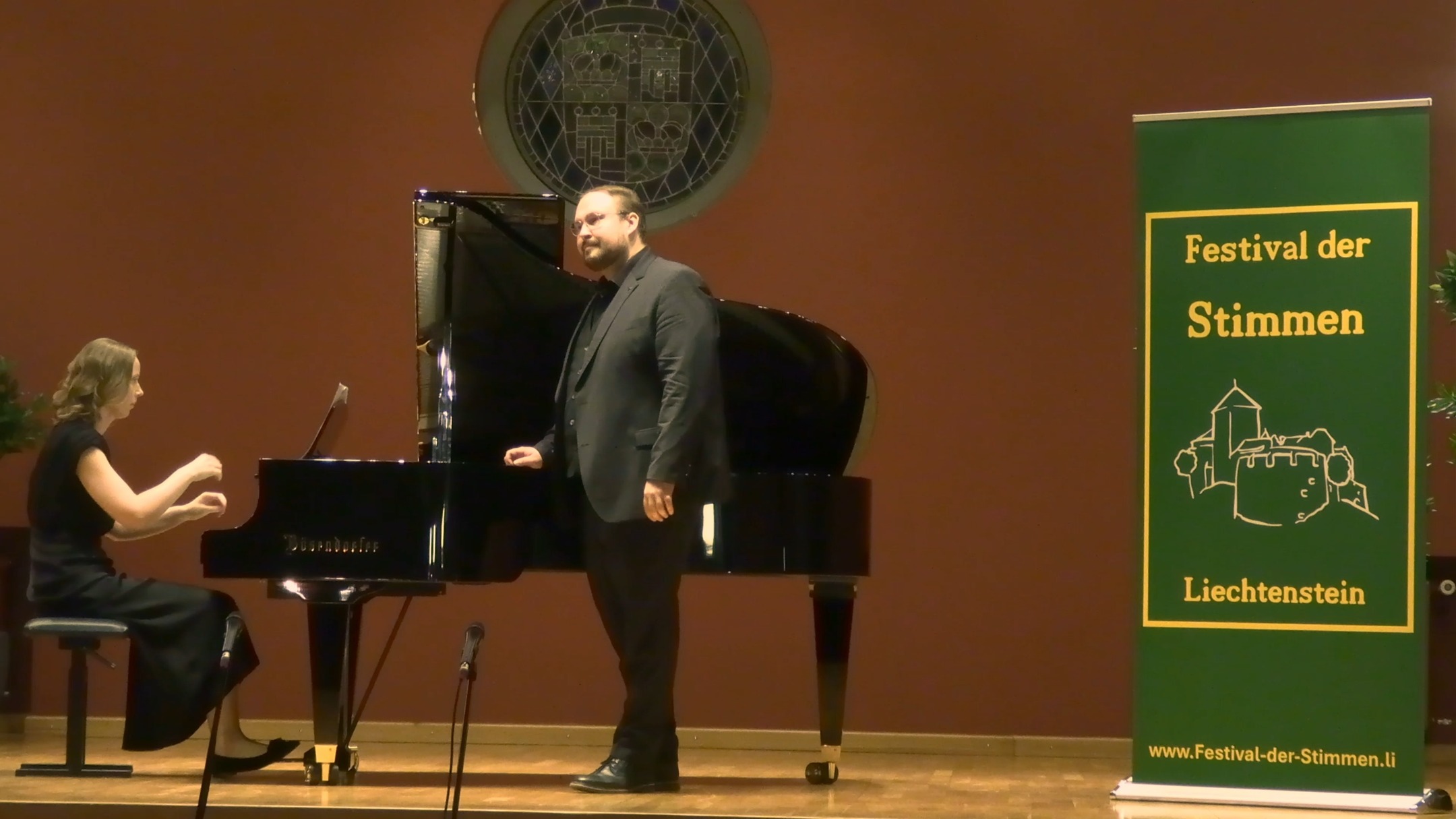
Pianist Evgenia Fölsche regularly engages with the Romantic art song and its psychological, poetic, and social layers of meaning in song programs. Frauenliebe und -leben is especially suited to an interpretation that connects musical inwardness with a critical perspective.
Frequently asked questions about Schumann: “Ich kann’s nicht fassen, nicht glauben”
Click on a question to show the answer.
What is “Ich kann’s nicht fassen, nicht glauben” about?
The song describes the moment in which the woman can hardly believe that the beloved man has chosen her. Happiness, dream, and disbelief intermingle.
Why does the dream play such a large role?
Fulfillment appears too great to the speaker to be real. Therefore she experiences what has happened like a dream that enchants and overwhelms her.
What is the meaning of the bouquet of roses in the visualization?
The large bouquet of red roses stands for being chosen, a promise of love, and overwhelming happiness. It brings color and abundance into the narrow bourgeois chamber.
Is the man present in this image?
No. The man is not shown directly. Only the effect of his promise on the woman is visible, which leaves the scene open between reality, memory, and dream.
What position does the song have in the cycle?
It is the third song of the cycle and marks the transition from humble veneration to believed being-chosen. The later bond through the ring is thereby prepared.