Frédéric Chopin: Scherzo No. 3 in C-sharp minor, Op. 39 gathers extreme contrasts into a drama of high tension: racing octave chains, sparkling figurations and an almost orchestral outer frame stand opposite a solemn, chorale-like middle section. The clear A–B–A architecture feels less episodic than inevitable — like an inner arc of tension that resolves only in the radiant major-mode ending known as a Picardy third. Composed in 1839, begun during the winter of 1838/39 in Mallorca and completed in France, the work is one of Chopin’s most concentrated and effective concert pieces.

Work data and form
Basic data
- Composer: Frédéric Chopin (1810–1849)
- Title: Scherzo No. 3 in C-sharp minor, Op. 39
- Tempo: Presto con fuoco
- Time signature: predominantly 3/4
- Genesis: 1839; begun during the winter of 1838/39 in Valldemossa, Mallorca
- First publication: 1840 – Paris (Troupenas), Leipzig (Breitkopf & Härtel), London (Wessel)
- Dedication: Adolphe Gutmann
- Duration: approx. 7–8 minutes
Form & structure
Expanded scherzo form A–B–A + coda: a highly energetic C-sharp minor outer frame with a striking octave gesture shapes the outer sections. The middle section, enharmonically D-flat major, appears chorale-like, broadly drawn and calm in texture. Reprise and coda condense the opening material and lead into a surprisingly clear major-mode ending, the Picardy third.
Genesis & context
Valldemossa 1838/39: resonance space without programmatic meaning
Chopin began work on Scherzo No. 3 during his stay at the Carthusian monastery of Valldemossa in Mallorca. The winter of 1838/39 was marked by illness, isolation and difficult climatic conditions. Unlike the first Scherzo, however, no direct political or programmatic references can be demonstrated.
The place functions instead as a historical resonance space: seclusion, massive architecture, weather and confinement form a plausible background for the work’s extreme polarity — without fixing the music to concrete extra-musical images.
In this context, Chopin’s so-called “Raindrop” Prelude, Op. 28 No. 15, is often mentioned as well, since it too is associated with Valldemossa. While the Prelude shapes monotonous recurrence in miniature form, Scherzo No. 3 appears as a large-scale unfolding of the same fundamental tension: outer unrest versus inner concentration.
Performance & reception
A formal premiere date is not documented; immediately after publication, the work became established in concert life. Early reviews emphasized the dramatic intensification of the outer frame and the solemn calm of the middle section — a contrast that remains central to the work’s effect today.
Reference recordings selection
- Alfred Cortot – historical recordings (APR/Hyperion)
- Vladimir Horowitz – studio and live recordings, including 1957
- Arthur Rubinstein – The Chopin Scherzos (RCA, 1959)
- Sviatoslav Richter – cycles with all four Scherzi
- Claudio Arrau – complete recordings
- Maurizio Pollini – DG editions
- Martha Argerich – concert recordings
Visual representation
Artistic visualization by Evgenia Fölsche:
The artistic representation refers to the Charterhouse of Valldemossa in Mallorca — the place still associated with Chopin’s winter in Mallorca.
Architecture, stone and light appear like a silent layer of memory: a monastic space in which retreat, concentration and inner tensions gather.
Against this background, the music gains narrative depth — between eruptive drama and the solemn, almost sacred breath of the chorale section.
The image does not offer simple “illustration”, but a resonance space: Valldemossa as a symbol of inwardness, storms outside and a clarity that opens at the end into a bright final light.
Music-theoretical analysis
Dramaturgy and compositional writing
The exposed octave gesture at the beginning functions as a structural motto and shapes both reprise and coda. By contrast, the middle section works with homophonic writing and clear voice leading — breadth instead of urgency, stillness instead of motoric drive.
Tonal and tension plan
- Outer frame: C-sharp minor – chromaticism, dominant tension, sequences
- Middle: enharmonically D-flat major – tonal brightening, hymn-like character
- Coda: condensation and turn toward the Picardy third in C-sharp major
Expression & interpretation
Scherzo No. 3 is often read as the confrontation of two spheres: outer drive and inner concentration. The middle section appears like a suspended core — memory, prayer or vision — enclosed by the highly energetic outer frame. The bright final turn does not make the work end triumphantly, but clarified: as overcoming, not victory.
Evgenia Fölsche – performances & recording
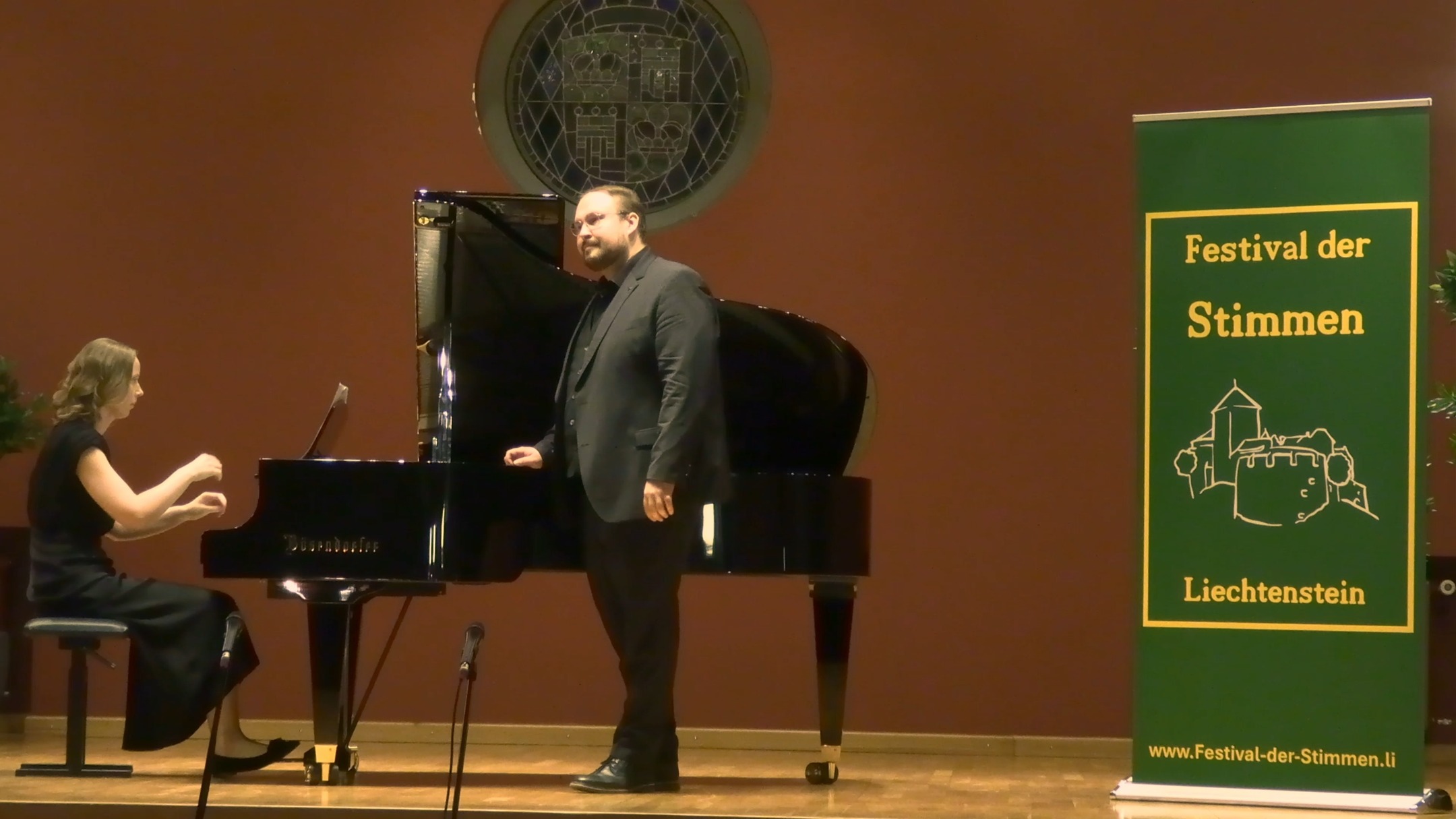
Pianist Evgenia Fölsche has performed and recorded Chopin’s Scherzo No. 3 several times. Her interpretation emphasizes organic tempo relationships, a vocally sustained chorale cantilena and clear, never overemphasized octave gestures.
Music & contact
Evgenia Fölsche plays Frédéric Chopin’s Scherzo No. 3: