“Am Meer” is No. 12 from Franz Schubert’s posthumously published song cycle Schwanengesang D 957 (1828/29), after Heinrich Heine. At the lonely fisherman’s house, a tender scene becomes a turn of fate: tears fall on the hand—the singer “drank” them, and now he interprets love as poison. Schubert shapes this into a floating, through-composed nocturne in C-sharp minor, very slow (with a calm rocking pulse): soft wave-figures and a single, shattering arch of climax.
The Poem (Heinrich Heine – Buch der Lieder, 1827)
The sea shone far and wide
In the last glow of evening;
We sat by the lonely fisherman’s house,
We sat silent and alone.
The mists rose, the water swelled,
The seagull flew back and forth;
From your eyes, tenderly,
The tears fell down.
I saw them fall upon your hand
And sank down on my knees;
From your white hand
I drank away the tears.
Since that hour my body has wasted away,
My soul is dying of longing; –
That unhappy woman
Has poisoned me with her tears.
Work Data & Overview
- Composer: Franz Schubert (1797–1828)
- Cycle: Schwanengesang D 957, No. 12 (Am Meer)
- Text source: Heinrich Heine (1797–1856)
- Composition: 1828; First publication (posthumous): 1829
- Key / Meter / Tempo: C-sharp minor, calm rocking pulse, very slow
- Duration: approx. 3:30–5:00 minutes
- Scoring: Voice and piano (transpositions common)
- Form: through-composed; four inner images (evening – waves/mist – tears/kneeling – poison point)
Poem Data
- Author: Heinrich Heine (1797–1856)
- Stanza form: 4 quatrains; calm, narrative manner
- Devices: seascape, symbolism of tears, reversal (tender gesture → “poison”), hyperbole of wasting away
Genesis & Cycle Context
Am Meer continues the darkening in the Heine group (Nos. 8–13) after Die Stadt and prepares the existential rigidity of Der Doppelgänger: closeness tips into toxicity. The apparent idyllic frame (evening, sea) becomes the vessel of a bitter point.
More on the song cycle: Schwanengesang – Overview.
Performance Practice & Reception
Pulse & diction: an extremely calm, evenly rocking basic pulse; consonants soft, vowels darkly sustained. No sentimentality—floating sobriety.
Piano texture: quiet, continuous wave figures (broken chords/arpeggios); transparent pedal; touches of color on “tears,” and the single clear peak of intensity on “poisoned”—immediately withdrawn again.
Reference Recordings (Selection)
- Dietrich Fischer-Dieskau – Gerald Moore
- Ian Bostridge – Julius Drake
- Matthias Goerne – Alfred Brendel
- Christoph Prégardien – Andreas Staier (fortepiano)
- Jonas Kaufmann – Helmut Deutsch
Analysis – Music
Wave Image & Breath Atmosphere
From the beginning, the song establishes a rocking climate: uniform motions that hold the gaze still. The voice remains syllabic, with barely perceptible upward inflections—closeness arises through muting.
Harmony, Form & Poison Point
Within the field of C-sharp minor, mediant and secondary colors open up the breadth of the sea; the through-composed design moves purposefully toward the climactic word “poisoned” (intensified harmonically and dynamically). The postlude returns to coolness—recognition without purification.
Visual Representation
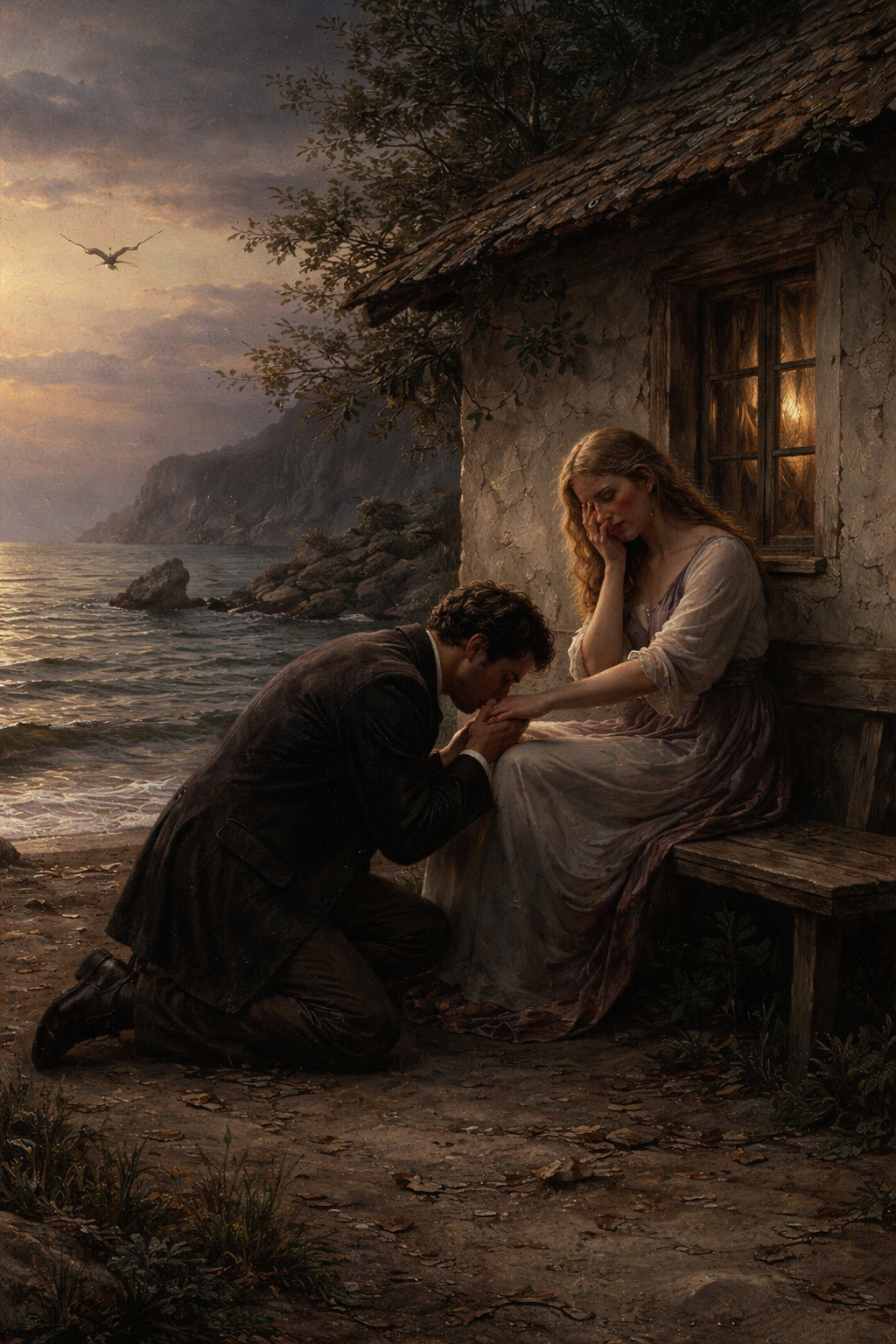
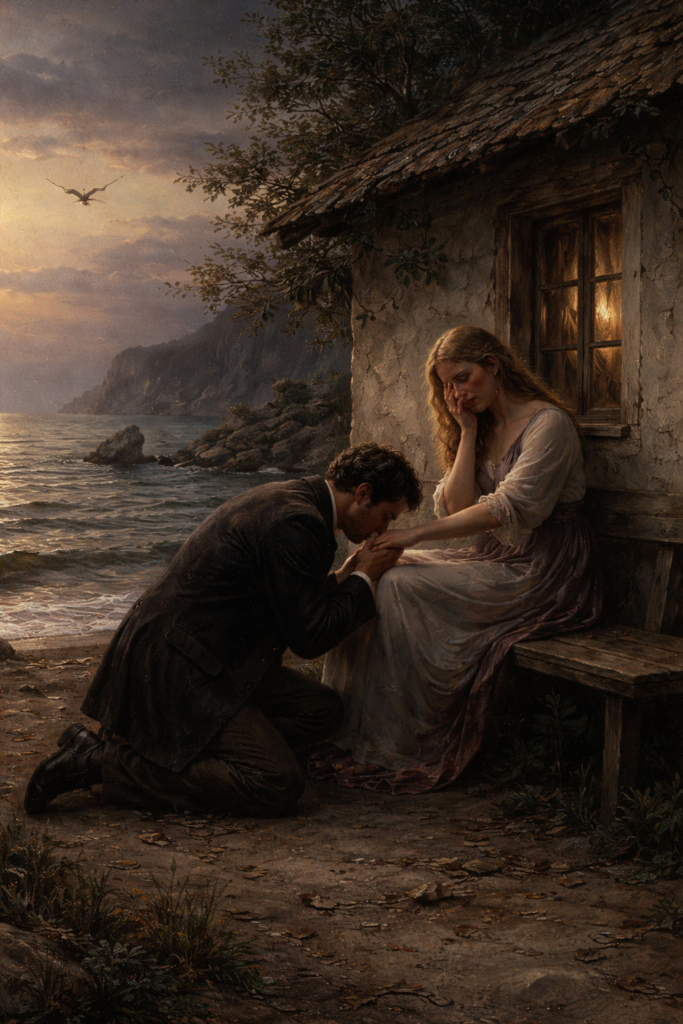
Artistic visualization by Evgenia Fölsche:
On the shore of a wide sea
two figures stand
close to one another.
The sky is
wide and open,
the water carries
a muted light
in which
sky and waves
are barely distinct.
Between them lies
a moment of deep
tenderness:
a man bends
toward the hand of a woman
and kisses there
the still-moist tears.
The gesture is
full of compassion
and silent nearness.
The woman remains
still and does not look
directly at the man,
but rather slightly
into the distance—
as though she still heard
the sound of the waves
within herself.
The image takes up
the melancholic mood
of the song:
like the soft
piano figures,
which unceasingly
sway between
major and minor,
everything here
moves within the space
between consolation and loss.
The vastness of the sea
becomes the mirror
of shared pain,
and the gesture of the kiss
becomes
the quiet language
of love and memory.
Analysis – Poetry
Heinrich Heine’s poem “Am Meer” belongs to the Heine group of Schwanengesang. It presents a remembered coastal scene in which landscape, love experience, and destructive passion merge into one another. The initially calm setting gradually transforms into an image of spiritual poisoning.
The first stanza opens with a quiet evening scene:
The sea shone far and wide
In the last glow of evening;
We sat by the lonely fisherman’s house,
We sat silent and alone.
The scene is marked by stillness and solitude. The sea shines in the last light of day, yet the pair sits “silent and alone.” The outer harmony of evening contrasts with an inner speechlessness—a tension that prepares the coming disaster.
The second stanza lets nature darken:
The mists rose, the water swelled,
The seagull flew back and forth;
From your eyes, tenderly
The tears fell down.
Mists and swelling water create an uncanny, unstable atmosphere. Nature grows restless—parallel to the inner agitation. The beloved’s tears fall “tenderly”: tenderness and pain are joined. The tear becomes the central motif of the poem.
The third stanza shows the speaker’s extreme reaction:
I saw them fall upon your hand
And sank down on my knees;
From your white hand
I drank away the tears.
The speaker kneels before the beloved—a gesture suspended between adoration and submission. He drinks the tears from her hand. The image is at once tender, religiously charged, and disturbingly intimate. The tear becomes a life-elixir—but also poison.
The fourth stanza draws the cruel conclusion:
Since that hour my body has wasted away,
My soul is dying of longing; –
That unhappy woman
Has poisoned me with her tears.
What appeared as a gesture of love is now interpreted as poisoning. Body and soul are destroyed. In retrospect, the beloved appears as an “unhappy woman” whose tears possess deadly power. Love turns into annihilation.
Formally, the poem intensifies from calm landscape through troubled nature to dramatic self-revelation. Landscape, memory, and psychic state merge completely. The clear stanzaic form fixes a scene whose content breaks out of all order.
Meaning & Effect within the Cycle
“Am Meer” presents love as a destructive force. Tenderness, longing, and devotion turn into self-loss and spiritual poisoning. In this way, the poem creates a radical counter-world to the romantic love idyll.
Typical of Heine, the outer landscape merges with inner experience. The sea, the mist, and the evening light become the projection surface of spiritual abysses.
Within Schwanengesang, this song forms the dark end-point of the Heine group. After pain, memory, and estrangement, love itself now appears as a deadly experience.
Schubert intensifies this extreme poem through heavy, wave-like piano figures and a vocal line that wavers between recitative, cry, and paralysis. The result is a shattering final image of human passion without redemption.
Evgenia Fölsche – Performances & Audio
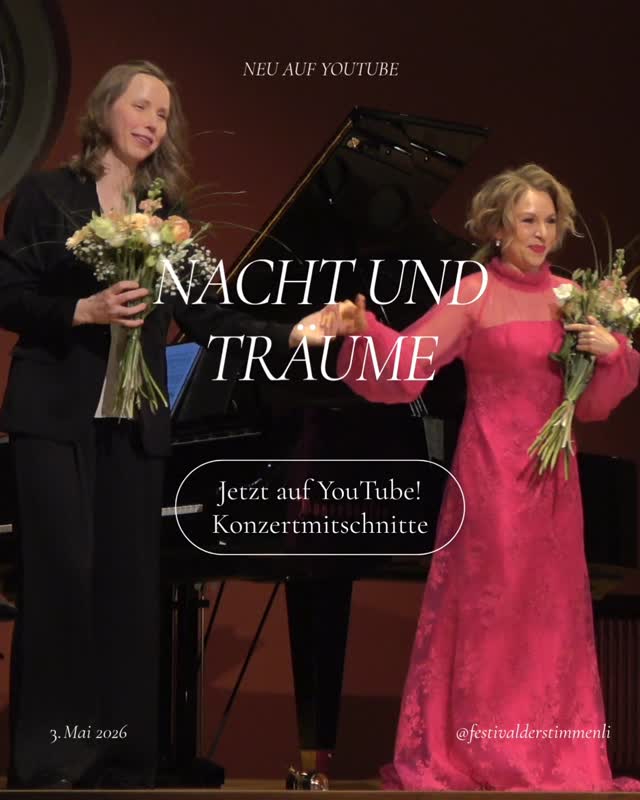
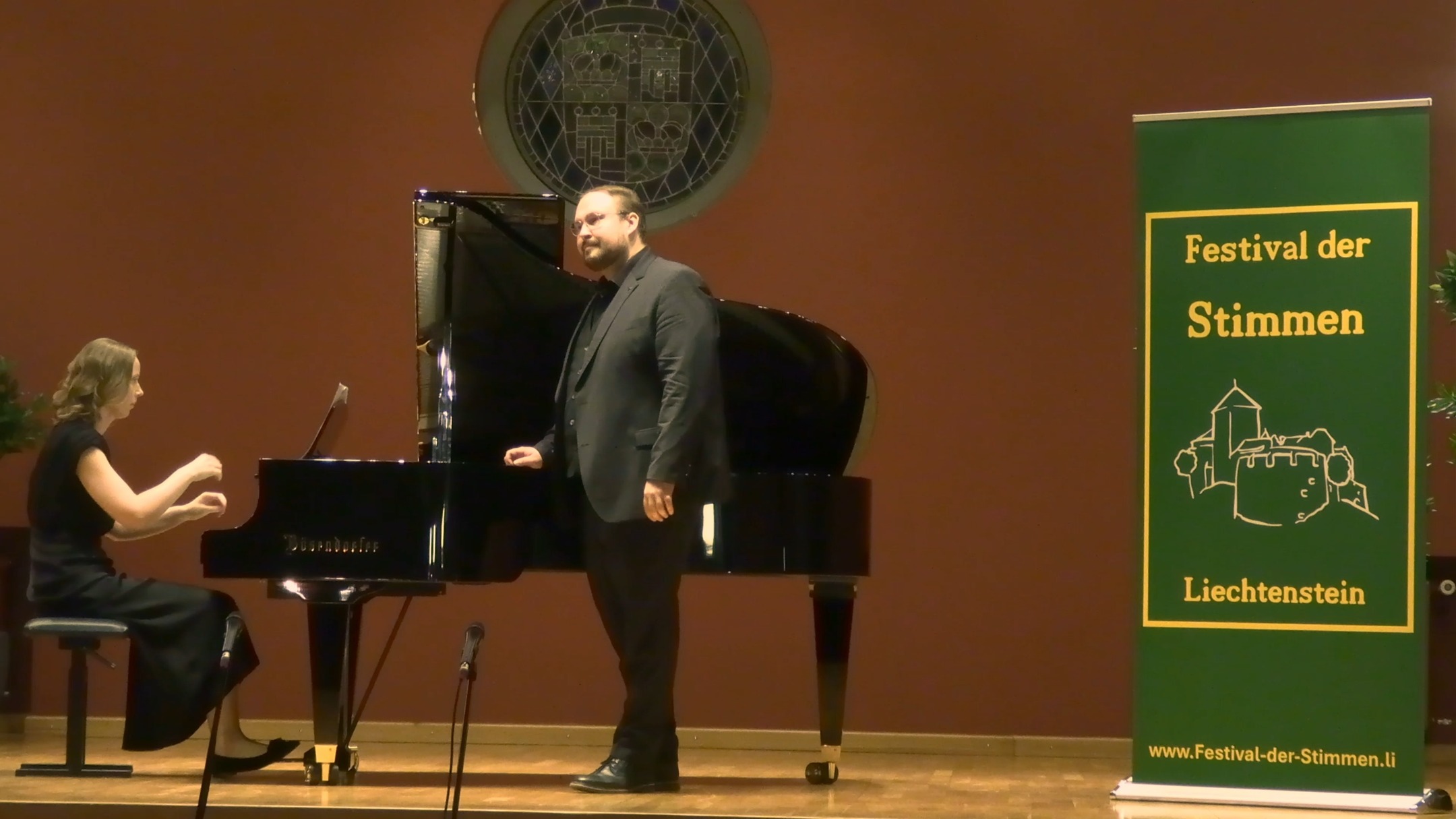
Pianist Evgenia Fölsche keeps the surface shimmering and cool: muted rocking, lean middle register, speech-close line—a light that gives no warmth.
Audio example: Am Meer with Dietrich Fischer-Dieskau and Gerald Moore
Concert Inquiry
Schwanengesang by Franz Schubert is part of Evgenia Fölsche’s Lied repertoire and is regularly performed in collaboration with renowned singers. Concert programs can be designed flexibly and adapted to different ensembles.
Evgenia Fölsche has collaborated, among others, with singers such as Benjamin Russell and Johann Kristinsson who include Schwanengesang in their repertoire.
Send concert inquiryFrequently Asked Questions about Schubert: “Am Meer” (Schwanengesang No. 12)
Click on a question to reveal the answer.
Is “Am Meer” strophic?
No: through-composed; the four Heine stanzas form a continuous, wave-like scene up to the poison point.
What is the key and overall character?
C-sharp minor, very slow, calm rocking; a single clear arch of intensification on “poisoned,” followed by immediate withdrawal.
How should one shape the “drinking of tears”?
With maximum tenderness: dynamically piano, close legato, minimal warmth of color; no pathos—the point belongs to the final stanza.