“Ich will meine Seele tauchen” is Song No. 5 from Robert Schumann’s cycle Dichterliebe op. 48 after Heinrich Heine. In tender, image-rich lines – the cup of the lily, the sounding breath – the poem circles around the memory of a kiss. Schumann responds with intimate, hushed musical speech and a hovering rocking gesture that carries sensuality and shyness at once.
The Poem (Heinrich Heine)
From: Lyrisches Intermezzo (Buch der Lieder)
I want to immerse my soul
Into the cup of the lily;
The lily shall breathe forth in sound
A song of my beloved.
The song shall tremble and quiver,
Like the kiss from her mouth
Which she once gave me
In a wondrously sweet hour.
Work Data & Overview
- Composer: Robert Schumann (1810–1856)
- Cycle: Dichterliebe op. 48, No. 5
- Text source: Heinrich Heine, Lyrisches Intermezzo (part of the Buch der Lieder)
- Composition: May/June 1840 (year of song); first edition 1844
- Tonal space / notation: A-minor sphere with bright colouring; rocking 6/8 gesture; songful, cantabile texture
- Tempo indications: Leise (“Softly”), carried very calmly; intimate cantabile
- Duration: approx. 1–2 minutes; one of the shortest songs in the cycle
- Scoring: voice (various ranges in published editions) and piano
- Form: two stanzas with subtle variation; short postlude as an aftersound
Data on the Poem
- Poet: Heinrich Heine (1797–1856)
- Origin (text): 1822/23; published in 1827 in the Buch der Lieder (Lyrisches Intermezzo)
- Stanza form: 2 stanzas of 4 lines each
- Rhyme scheme: alternating rhyme (ABAB)
- Stylistic devices: symbolism (lily, cup), synaesthesia (“breathe forth in sound”), sensuous metaphorics of remembrance
Genesis & Contexts
The song was composed in the creative year of song, 1840, in which Schumann produced Heine settings in rapid succession. Within Dichterliebe, No. 5 marks a delicate inner station between early confession and later bitterness – an intimate miniature of the art of remembrance.
Heine’s text condenses the Romantic imagery of the cycle: metaphors of nature bear the memory of a “wondrously sweet hour.” The synaesthetic phrase (“klingend hauchen”) joins sound, fragrance, and touch – a shimmering image that Schumann takes up in a fragrant 6/8 meter.
Performance Practice & Reception
As a short form with a discreet postlude, No. 5 invites chamber-musical intimacy: dynamic restraint, breathing rubato, and fine word declamation are central. Within the course of the cycle, the song feels like a quiet pause before darker colours follow.
Reference Recordings (Selection)
- Dietrich Fischer-Dieskau – Jörg Demus
- Fritz Wunderlich – Hubert Giesen
- Ian Bostridge – Julius Drake
- Peter Pears – Benjamin Britten
- Matthias Goerne – Christoph Eschenbach
Analysis – Music
Quiet Rocking & Sound Image
The rocking 6/8 meter, broken accompanying figures, and narrow dynamic terraces (p to mp) create a “whispered” sonic diptych. The voice carries a cantabile line with delicate emphasis on words such as Seele, Lilie, and Kuß, while the piano illustrates the idea of breath in softly blending chords.
Two-Stanza Form & Variation
The second stanza varies the first in subtle ways: slight melodic embellishments, occasional harmonic deepening, and a minimally extended postlude that savours the resonance of memory. The cadence remains understated – no triumph, but a gentle fading away.
Visual Representation
Artistic visualization:
On a simple wooden table stands
a glass vase holding a white lily.
Its cup is wide open and
flooded with warm light.
Within it shimmers a delicate
reddish tone – scarcely visible,
like a hidden glow.
Beside the vase lies a violin.
Its wood reflects the golden light
and takes up the warm hue
of the lily’s cup. The instrument
rests in silence, as though it too
were listening to the invisible sound.
Between flower and violin there arises
a quiet connection: the lily
stands for purity and inwardness,
the violin for that which “breathes forth in sound.”
Nature and music meet one another.
The light envelops both elements
in soft warmth. No movement,
no dramatic contrast –
only a gentle shimmering.
Thus the image becomes a symbol
of the poem: the soul immerses itself
in the cup of memory,
and from it arises a song
that trembles and quivers tenderly.
Analysis – Poetry
The poem “Ich will meine Seele tauchen” belongs to the most intimate and sonically refined miniatures of Dichterliebe. It unites natural image, musical metaphor, and memory into a delicate, almost hovering scene.
The Soul in the Cup of the Flower
I want to immerse my soul
Into the cup of the lily;
The lily shall breathe forth in sound
A song of my beloved.
Already the opening line introduces a powerful image: the soul is immersed into the “cup of the lily.” The lily traditionally stands for purity and ideality.
The “cup” at the same time carries both a religious and a sensuous connotation. The fusion of soul and blossom creates an intimate union of inwardness and nature.
Remarkable is the connection of image and sound: the lily “shall breathe forth in sound.” Nature becomes a resonant space for song. In this way the poem reflects upon its own medium – song arises out of feeling.
Memory as Bodily Tremor
The song shall tremble and quiver,
Like the kiss from her mouth,
Which she once gave me
In a wondrously sweet hour.
The second stanza specifies the song: it shall “tremble and quiver.” The motion is not loud or passionate, but tender, bodily near, vibrating.
The comparison with the kiss lends the poem a sensuous dimension. The memory of a single moment – “in a wondrously sweet hour” – becomes the origin of the song.
Love appears here not as something present, but as remembered. The poem lives from turning back toward a moment in the past.
Meaning & Effect within the Cycle
Within Dichterliebe, this song marks a moment of intense inwardness. After the cheerful idealisation of the beloved, the gaze now turns more strongly inward.
The decisive idea is aesthetic transformation: memory becomes sound, feeling becomes song. Nature serves as the medium through which the soul speaks.
At the same time, in the emphasis on the past there lies a quiet shadow. The kiss belongs to the past. The song is not the expression of fulfilled presence, but rather the resonance of a memory.
Thus an atmosphere arises of delicate melancholy. The poem sounds like an inner after-tremor of a moment of happiness – sweet, suspended, and already touched by transience.
Evgenia Fölsche – Performances & Audio
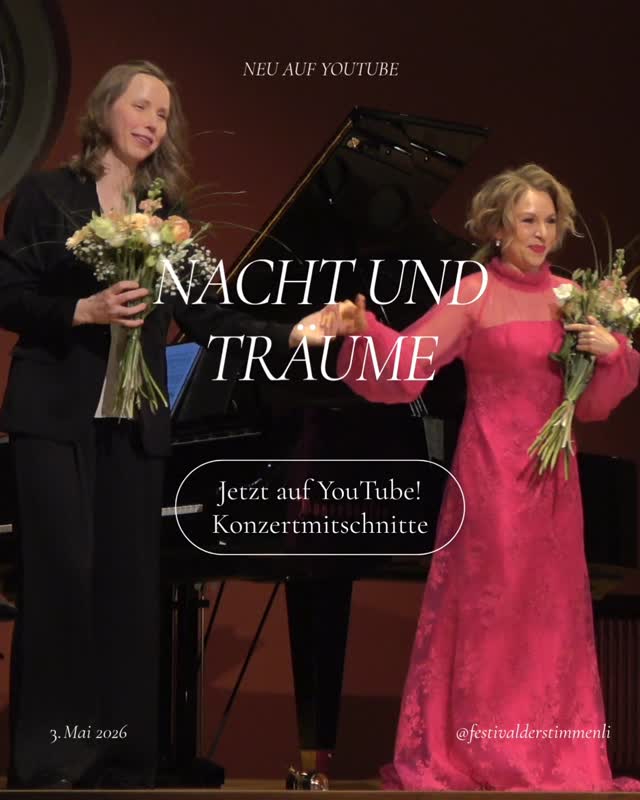
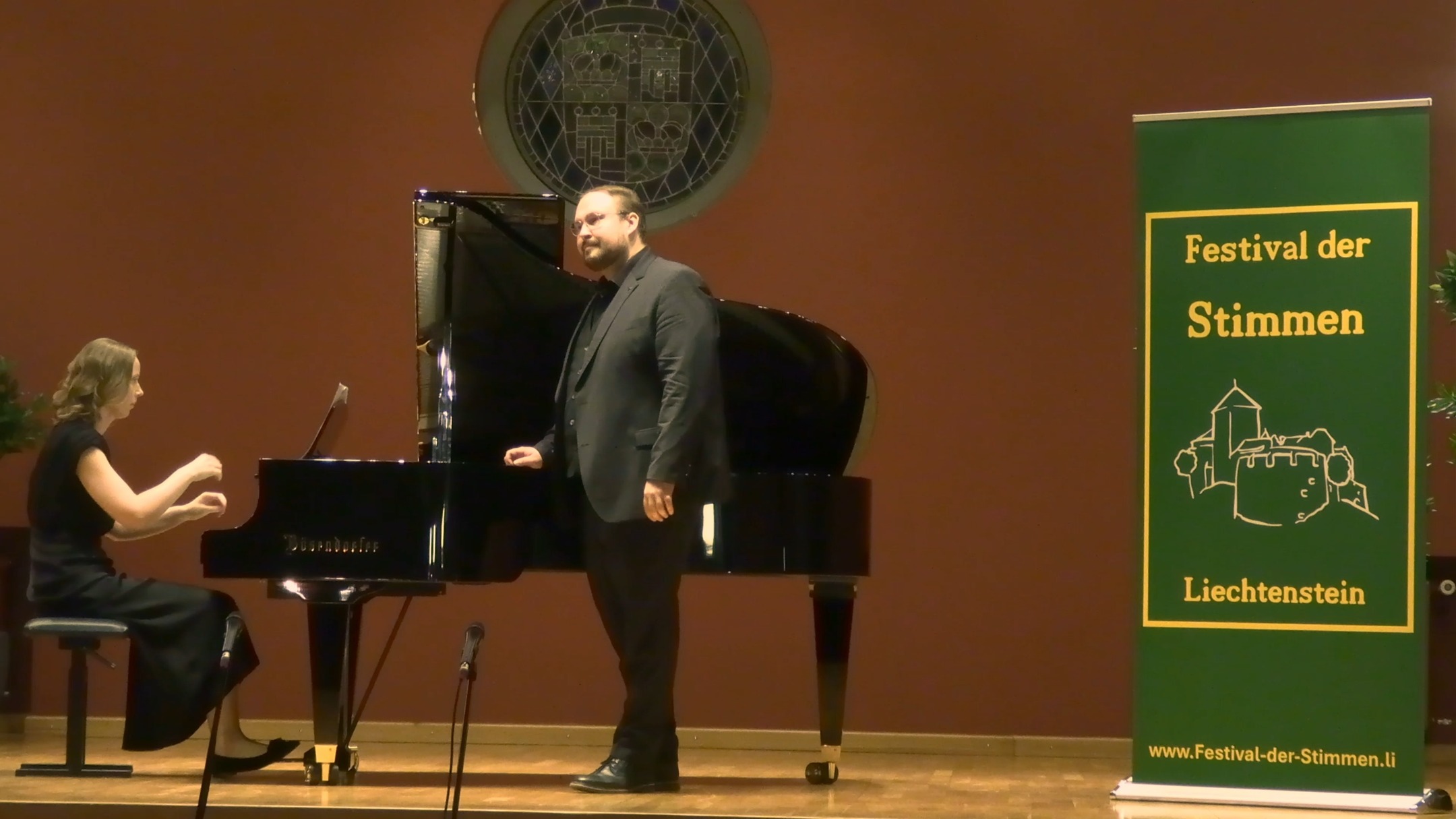
Pianist Evgenia Fölsche has accompanied “Ich will meine Seele tauchen” several times in concert – including with singers specialising in Lied – and has presented it within Dichterliebe programmes.
Listening example: Add audio/video link here
Frequently Asked Questions about Schumann: “Ich will meine Seele tauchen” (Dichterliebe No. 5)
Click on a question to reveal the answer.
What is “Ich will meine Seele tauchen” about?
The lyrical self immerses its soul “into the cup of the lily”: natural image and memory merge into a delicate evocation of a kiss from the past.
Which musical features shape the song?
Rocking 6/8 meter, soft cantabile, discreet postlude; the voice declaims close to the text, while the piano breathes softly accompanying figures.
In which range is the song performed?
Editions and transpositions exist for different ranges (high / middle / low); it is often sung by tenor, baritone, soprano, and mezzo-soprano.
How does No. 5 fit into the cycle?
As a short, intimate inner station, the song forms a calm breath before the more dramatic pieces of the middle section of Dichterliebe.
Are there interpretive pitfalls?
Too much dynamic weight and a hurried tempo take away the song’s magic. Decisive are textual clarity, subtle rubato, and a floating, breathing tone.