“Die Rose, die Lilie, die Taube, die Sonne” is Song No. 3 from Robert Schumann’s Dichterliebe op. 48 after Heinrich Heine. In only six lines of verse, Schumann condenses a cheerful declaration of love – buoyant, pointed, and sparkling with clarity. The “moment of decision” becomes a musical epigram: brief, direct, charming, and driven by the energy of Munter (“Lively”).
The Poem (Heinrich Heine) – Full Text
From: Lyrisches Intermezzo (Buch der Lieder)
The rose, the lily, the dove, the sun,
I once loved them all in the bliss of love.
I love them no more, I love only
The little one, the fine one, the pure one, the one;
She herself, all love’s delight,
Is rose and lily and dove and sun.
Work & Poem Data
Data on the Composition
- Composer: Robert Schumann (1810–1856)
- Cycle: Dichterliebe op. 48, No. 3
- Composition: 1840 (year of song); First edition: 1844 (C. F. Peters, Leipzig)
- Tempo (first edition): Munter (“Lively”)
- Key / notation: D major (2 sharps)
- Time signature: 2/4; an anacrustic gesture
- Form & duration: one-part, single-stanza song form; approx. 0:45–1:15
- Scoring: voice and piano
Data on the Poem
- Poet: Heinrich Heine (1797–1856)
- Origin (text): 1822/23; Publication: 1827 in the Buch der Lieder (Lyrisches Intermezzo)
- Stanza form: 1 stanza of 6 lines
- Rhyme scheme: a a b b a a (“Sonne/Wonne” – “alleine/Eine” – “Wonne/Sonne”)
- Meter: predominantly trochaic, four stresses; feminine cadences
- Rhetoric: enumerative figure (rose/lily/dove/sun) → point: “the one” gathers all symbols into herself
Genesis & Contexts
The settings of Dichterliebe were composed in May and June 1840; the 16-song printed version appeared in 1844. Dramaturgically, Heine’s poems trace an arc from blossoming to disillusionment; Song No. 3 marks, within the cycle, the euphoric concentration of the lover’s confession – as a cheerful, concise “yes.”
Performance Practice & Reception
In concert, No. 3 functions like a sparkling brightening between No. 2 and No. 4. Typical are fresh tempi, buoyant diction, and precise consonants; the piano accompanies with a light pulse of accented beats and lean articulation. Audiences respond especially to the song’s pointed brevity and elegant ending.
Analysis – Music
Declamation & Texture
The vocal line is syllabic, with clear speech accents; the line “Die Kleine, die Feine, die Reine, die Eine” gains a percussive lightness through its quick succession of syllables. The piano sets quarter-note-supported chords and small upbeat gestures that underline the swing of the 2/4 time – “lively,” not heavy.
Harmony & Tonal Relations
- Centre: D major with clearly goal-directed dominant relations
- Rhetoric: cadences frame the point; there are hardly any digressions – the focus lies on declamatory clarity
- Text image: the enumerations carry upward gestures; the point closes brightly and decisively
Visual Representation
Artistic visualization:
A simple wooden table stands in a
summer garden. Warm light
floods the scene – it is either
early evening or a golden
morning, when the sun stands low
and bathes everything in a gentle radiance.
On the table stands a slender
glass vase. In it rises a
glowing red rose beside a
white lily. The rose appears
powerful and complete,
the lily clear and still.
Passion and purity
stand side by side.
Beside the vase sits a
white dove. Its plumage
catches the sunlight.
It seems calm, almost dignified,
as though it were part of a
consciously composed order.
In the background, the sun breaks
through the foliage of the garden.
Its golden light binds together
all the elements: flower, bird,
table, and space merge
into a harmonious unity.
The image first presents the four symbols
of the poem separately –
rose, lily, dove, and sun.
Yet the shared light
unites them. What in the poem
flows together in the beloved
appears here as a quiet,
radiant arrangement.
Nature becomes the stage
of idealisation.
Analysis – Poetry
The poem “Die Rose, die Lilie, die Taube, die Sonne” belongs to the most cheerful and at the same time most artfully crafted miniatures of Dichterliebe. After the sensitive inwardness of the first two songs, there appears here an almost folk-song-like clarity. The language seems simple – yet it is rhetorically constructed with precision.
Enumeration and Intensification
The rose, the lily, the dove, the sun,
I once loved them all in the bliss of love.
The first line is a solemn enumeration. Rose, lily, dove, and sun are classical symbols of love: beauty, purity, tenderness, and warmth. The anaphoric repetition of “the” creates rhythmic closure.
At the same time, a certain exaggeration can already be sensed in this abundance of images. The speaker loved “all” of them – a hint of earlier infatuation.
Reduction to the One
I love them no more, I love only
The little one, the fine one, the pure one, the one;
With abrupt change, the multiplicity is withdrawn. “I love them no more” marks a clear caesura. In place of many ideals, a single figure appears.
The fourfold sequence of internal rhyme – “Kleine, Feine, Reine, Eine” – intensifies both sonically and emotionally. The rhyme seems almost playful, almost dance-like. In content, however, it sharpens the statement: everything is concentrated in one person.
Fusion of Symbol and Beloved
She herself, all love’s delight,
Is rose and lily and dove and sun.
In the final lines, the opening images return. But now they are no longer independent natural images, but qualities of the beloved herself.
The beloved becomes the embodiment of all ideals. Nature metaphors and the object of love merge completely. Outward symbolism becomes inward projection.
Meaning & Effect within the Cycle
Within Dichterliebe, this song stands under the sign of youthful infatuation. It sounds cheerful, almost carefree, and forms a contrast to the later irony and bitterness of the cycle.
The decisive idea is idealisation: the beloved is not portrayed as a real person, but as the sum of poetic symbols. She is the projection surface of all images of love.
Yet precisely in this heightening there already lies a subtle irony. The extreme concentration on “the one” reveals a Romantic absolutism that will break apart in the later course of the cycle.
Thus the song appears as a moment of radiant concentration – a high point of enthusiasm whose brilliance, in retrospect, already seems fragile.
Evgenia Fölsche – Performances
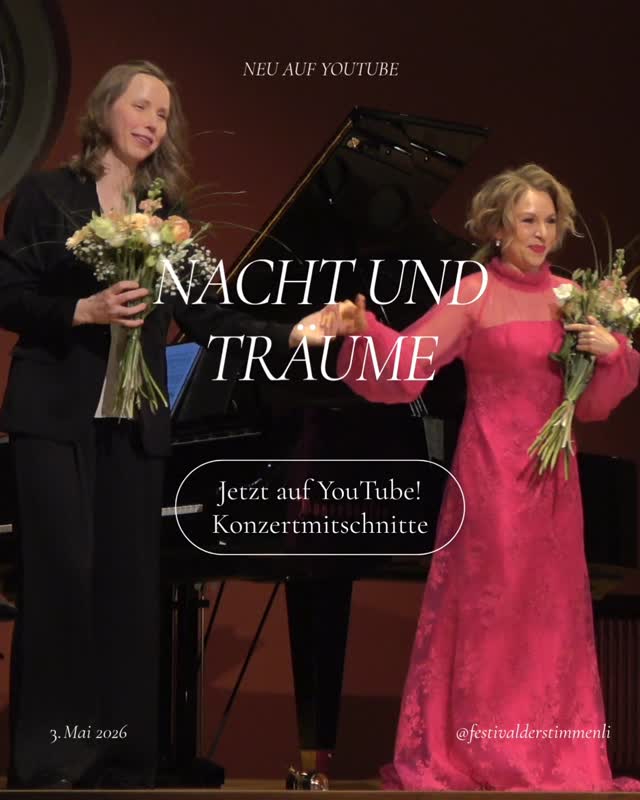
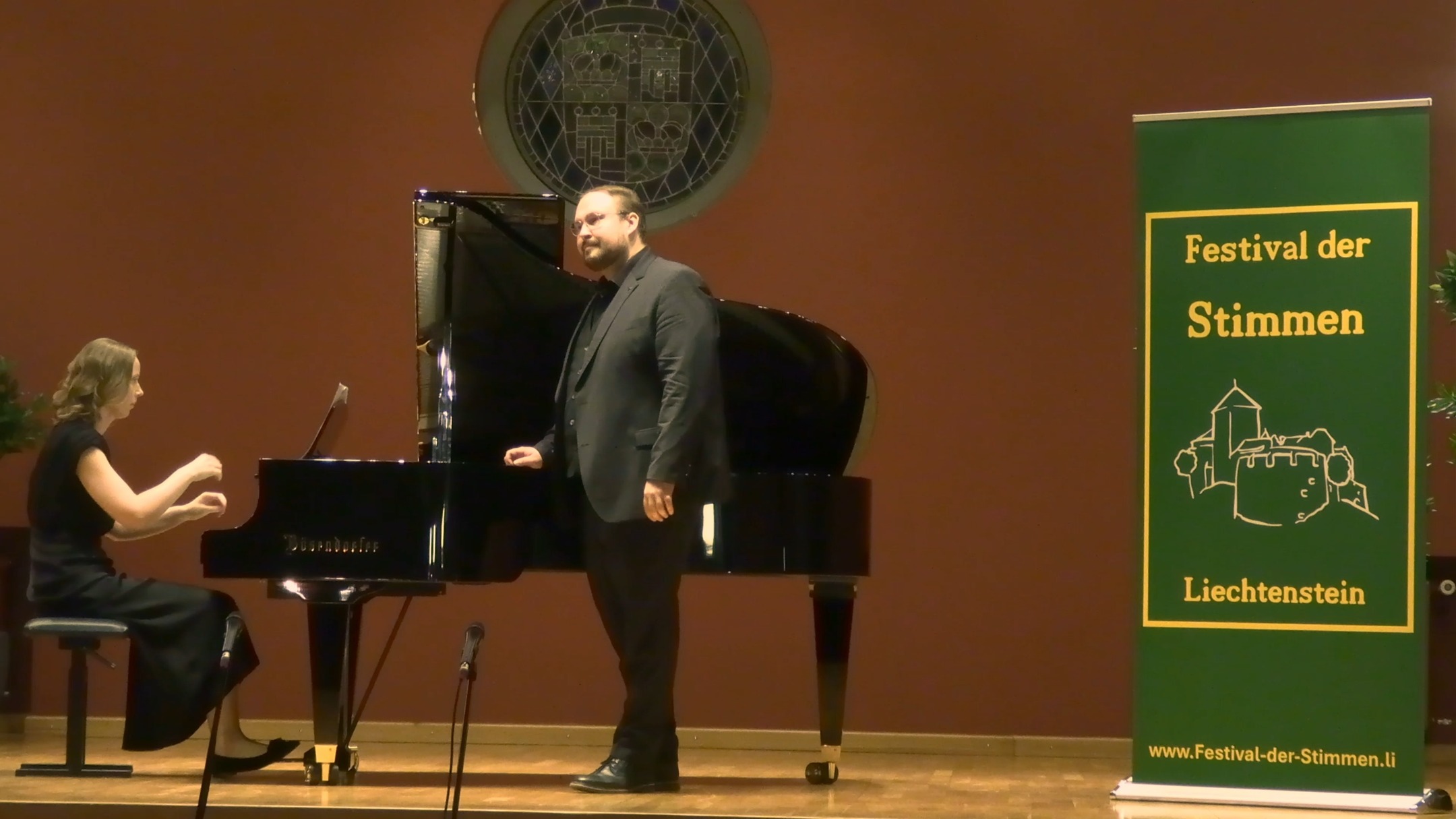
Pianist Evgenia Fölsche has performed “Die Rose, die Lilie, die Taube, die Sonne” many times within complete Dichterliebe programmes with various singers (including projects with Benjamin Russell).
FAQ – “Die Rose, die Lilie, die Taube, die Sonne” (Schumann, Dichterliebe No. 3)
Click on a question to reveal the answer.
What tempo and expression marking does the first edition give?
Schumann writes “Munter” (“Lively”) – the piece lives through buoyant articulation and clear consonants.
In which key is the song written?
D major (two sharps), notated in 2/4 – with an anacrustic gesture.
How long is the piece?
Depending on tempo, approx. 45–75 seconds; it is one of the shortest numbers in the cycle.
Is the song strophic?
The poem consists of one six-line stanza; the setting is conceived as single-stanza and one-part.
Are there any interpretation tips?
Light legato with precise diction, not too heavy an accentuation in the piano; musically focus the point (“die Eine”) with clarity.
Sources (Selection)
- First edition (C. F. Peters) – Song No. 3 with tempo marking Munter, D major, 2/4. Path: IMSLP – Dichterliebe 1st edition (PDF)
- Text (Heine) and translation: Oxford Song – “Die Rose, die Lilie, die Taube, die Sonne” · Lieder.net – text page
- Cycle overview (1840/1844), context: Wikipedia – Dichterliebe