“Hör’ ich das Liedchen klingen” is Song No. 10 from Robert Schumann’s cycle Dichterliebe op. 48 after Heinrich Heine. A single motif of memory — the “little song” of the beloved — triggers a surge of pain that finds release in tears. Schumann condenses this into a simple, intimate miniature of lament, with calm pulse, breathing declamation, and a quiet postlude.
The Poem (Heinrich Heine)
From: Lyrisches Intermezzo (Buch der Lieder)
When I hear the little song resounding,
Which once my beloved sang,
My breast feels as though it would burst
With wild pressure of pain.
A dark longing drives me
Up to the forest heights,
There my excessive sorrow
Dissolves into tears.
Work Data & Overview
- Composer: Robert Schumann (1810–1856)
- Cycle: Dichterliebe op. 48, No. 10
- Text source: Heinrich Heine, Lyrisches Intermezzo (part of the Buch der Lieder)
- Composition: May/June 1840 (Year of Song); first edition 1844
- Tonal space / notation: a minor-leaning tonal sphere; calm, even pulse; song-like, cantabile texture
- Tempo indications: Slow, very intimate; cantabile
- Duration: approx. 1–2 minutes; concentrated miniature of lament
- Scoring: voice (various ranges in published editions) and piano
- Form: two stanzas with subtle variation; short, fading postlude
Data on the Poem
- Poet: Heinrich Heine (1797–1856)
- Origin (text): 1822/23; published in 1827 in the Buch der Lieder (Lyrisches Intermezzo)
- Stanza form: 2 stanzas of 4 lines each
- Rhyme scheme: alternating rhyme (ABAB)
- Stylistic devices: memory motif (“little song”), hyperbole (“my breast would burst”), Romantic nature topos (forest height)
Genesis & Contexts
The song was composed in the great Year of Song, 1840, in which Schumann gathered numerous Heine settings into a large cycle. No. 10 follows the glaring “wedding cut” of No. 9 and withdraws into introspection — the pain is not lamented outwardly, but quietly endured.
Heine’s poem reduces the action to trigger (song), bodily reaction (breast), and the movement into nature, where tears release the affect. Schumann mirrors this motion in the music: from impulse to relief.
Performance Practice & Reception
A calm pulse, clear verbal shaping, and a noble p are required. Overdrawn rubato or too much vibrato disturbs the simplicity; the postlude is most effective when it truly “ebbs away.”
Reference Recordings (Selection)
- Fritz Wunderlich – Hubert Giesen
- Dietrich Fischer-Dieskau – Gerald Moore
- Ian Bostridge – Julius Drake
- Peter Schreier – András Schiff
- Matthias Goerne – Christoph Eschenbach
Analysis – Music
Sound World & Declamation
A simple, legato piano texture carries the cantabile voice; accents fall on key words (Liedchen, Brust, Tränen). The dynamic range remains narrowly framed (p–mp), which makes the inner pressure all the more tangible.
Form & Postlude
The second stanza varies subtly — with slightly heightened tension before “Waldeshöh’” and a release on “Tränen.” The short postlude lingers in a zone of repose and lets the memory fade away.
Visual Representation

Artistic visualization:
On a rocky ledge stands a solitary
wanderer, his back turned to the viewer.
His dark cloak is moved by the wind,
while the rain lashes diagonally and unceasingly
across the landscape.
Beneath him opens the wide Rhine valley.
The river stretches like a silvery ribbon
through the depth, the slopes are covered
with dark forests. In the distance,
the lights of Vaduz and the castle on the hillside
can only just be discerned.
The perspective emphasizes the vastness:
the mountains recede, the valley extends
into the distance. Yet this vastness
brings no freedom. It feels
overwhelming, almost oppressive.
The rain becomes a visible counterpart
to the tears. It does not fall gently,
but in torrents — like an outward manifestation
of the “wild pressure of pain.”
Nature seems to absorb
the inner motion of the
lyrical self and to
intensify it.
Thus the “forest height” becomes
not a place of elevation,
but a stage of release.
The breadth of the valley
and the elemental
violence of the rain mirror
the excessive sorrow
that dissolves
into tears.
Analysis – Poetry
When I hear the little song resounding,
Which once my beloved sang,
My breast feels as though it would burst
With wild pressure of pain.
The poem begins with an acoustic trigger. Not the sight, not memory alone, but the “little song” calls forth the pain. Music becomes the bearer of the past.
The word “little song” at first seems diminutive and tender, almost harmless. But its effect is enormous: the breast feels as though it would burst. Between outward tenderness and inward violence there arises a sharp contrast.
The “wild pressure of pain” is not quiet melancholy, but eruptive movement. Memory is experienced physically — as pressure, as inward explosion.
A dark longing drives me
Up to the forest heights,
There my excessive sorrow
Dissolves into tears.
The second stanza shifts the scene from the inner space outward. A “dark longing” drives the self out into nature.
The “forest height” is a place of solitude and seclusion. Here there is no dramatic outburst, but rather a dissolving away: the “excessive sorrow” turns into tears.
The movement of the poem leads from acoustic stimulus to bodily tension and finally to cathartic release. Pain is not overcome, but discharged.
Meaning & Effect within the Cycle
Within Dichterliebe, this song marks a moment of renewed turning back into pain. Love is no longer present — it exists only as memory.
Particularly significant is the motif of music within the poem: a song calls forth the pain. In this, the situation of the whole cycle is reflected. Music itself becomes the medium of memory.
Schumann’s setting underscores this tension impressively. The song begins with an agitated, almost urgent gesture. The accompaniment feels restless and inwardly unsettled.
In the second part the sonic space opens out. The music gains breadth, as though corresponding to the path “up to the forest heights.” But this calm is no redemption, rather a place of tears.
The song shows that memory is not gentle. It is painful, physical, inescapable. Music itself becomes both the trigger and the space in which grief is transformed into sound.
Evgenia Fölsche – Performances & Audio
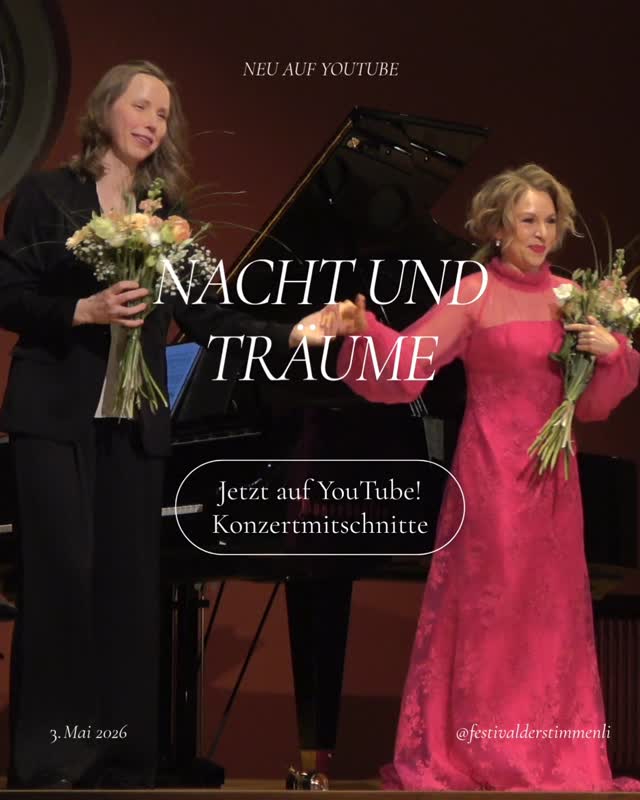
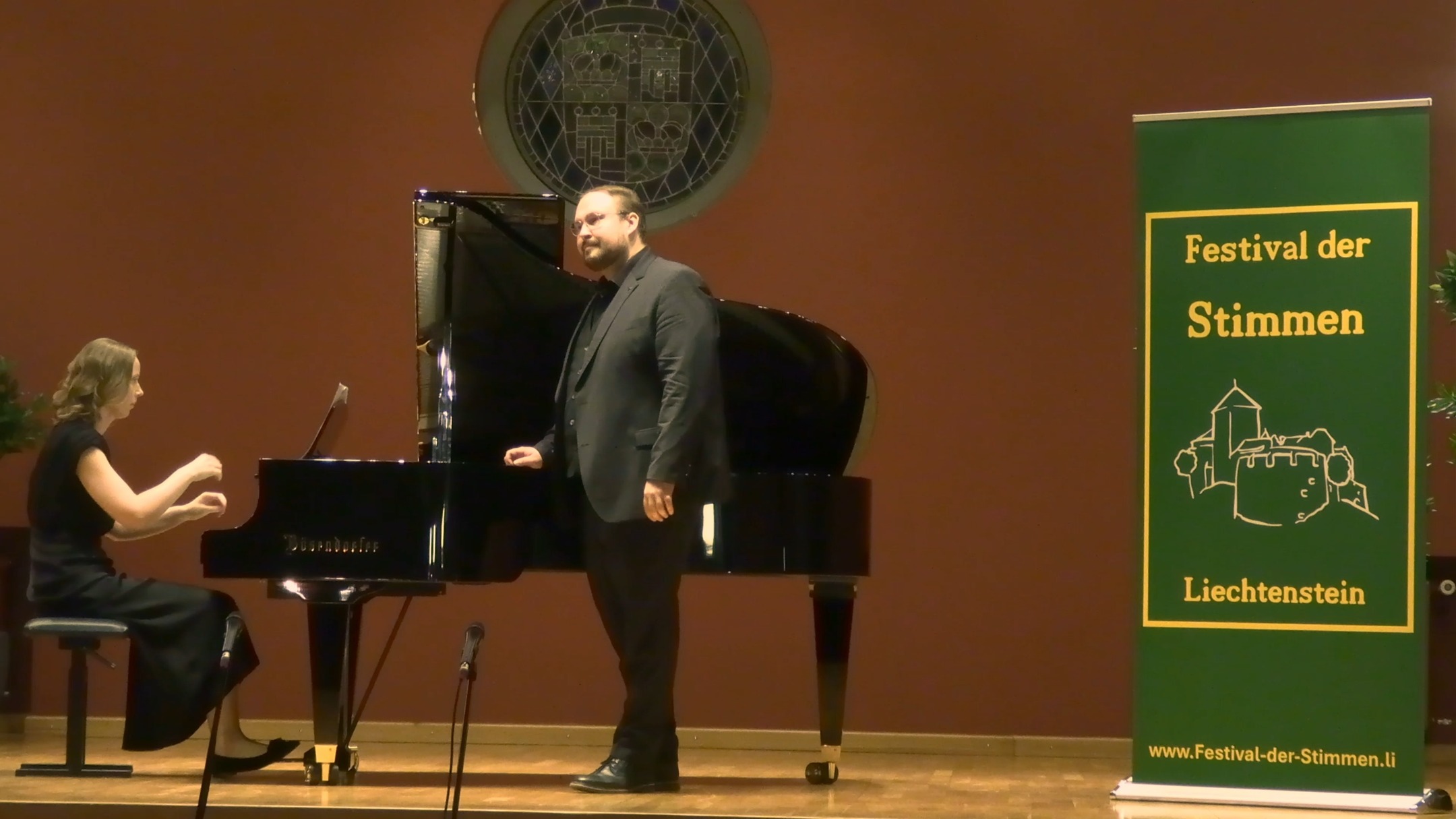
Pianist Evgenia Fölsche has frequently accompanied “Hör’ ich das Liedchen klingen” in complete Dichterliebe performances; the balance between textual immediacy and breadth of breath is central.
Frequently Asked Questions about Schumann: “Hör’ ich das Liedchen klingen” (Dichterliebe No. 10)
Click on a question to reveal the answer.
What is the song about?
An old “little song” triggers overwhelming pain of memory; in nature, the sorrow dissolves into tears.
How does Schumann’s setting sound?
Calm, intimate cantabile with legato piano writing, narrow dynamics, and a quiet postlude.
Is the song strophic?
Yes, two stanzas with subtle variations in the tension curve; short postlude.
Which voice types are common?
Editions/transpositions exist for various ranges; frequently soprano/mezzo-soprano as well as tenor/baritone.
Interpretive tip?
Do not drag the tempo; bring the text forward, plan the breath generously — the release at the end needs calm.