“Wenn ich in deine Augen seh’” is Song No. 4 from Robert Schumann’s Dichterliebe op. 48 after Heinrich Heine. In two brief quatrains, Schumann gathers the entire emotional arc between consolation, healing, and tears – sustained by the calm of Langsam (“Slow”) and intimate declamation. The piece feels like a quiet interior monologue: tender, immediate, and shaded with subtle harmonic nuances.
The Poem (Heinrich Heine) – Full Text
From: Lyrisches Intermezzo (Buch der Lieder)
When I look into your eyes,
All my sorrow and pain vanish;
But when I kiss your mouth,
I become wholly and completely well.
When I lean against your breast,
A heavenly bliss comes over me;
But when you say: I love you!
Then I must weep most bitterly.
Work & Poem Data
Data on the Composition
- Composer: Robert Schumann (1810–1856)
- Cycle: Dichterliebe op. 48, No. 4
- Composition: 1840 (year of song) – First edition: 1844, C. F. Peters (Leipzig)
- Tempo (first edition): Langsam (“Slow”) (title heading of the song)
- Tonal framework: D major with brief digressions including A major; calm cadences (cf. first edition and analyses)
- Form: strophic (2 stanzas on the same musical model)
- Scoring & duration: voice and piano; approx. 1–2 minutes
Data on the Poem
- Poet: Heinrich Heine (1797–1856)
- Origin (text): 1822/23; Publication: 1827 in the Buch der Lieder (Lyrisches Intermezzo)
- Stanza form: 2 × 4 lines
- Rhyme scheme: couplet logic in each stanza (a a b b) with a semantic point at the end of the stanza
- Meter: regularly iambic (four stresses, with slight variants)
- Semantics: consolation/healing (stanza 1) – overwhelming emotion/tears (stanza 2)
Genesis & Contexts
Schumann composed the Heine settings in May and June 1840; the printed 16-song version appeared in 1844 with Peters. Within the cycle, No. 4 forms a quiet point of repose after the bright euphoria of No. 3 – an intimate confession that already lets the shadow of tears be sensed.
Heine’s text from the Lyrisches Intermezzo traces the dramaturgy of love from blossoming to disillusionment. The poem feels like a condensation of the early phase of happiness, with a surprising emotional break in the final line.
Performance Practice & Reception
In performance, the song is usually shaped calmly and sustainedly, with very controlled piano dynamics. The piano plays a central role: broad, connected chords as a point of repose – between them short, speech-like interjections; small ritardandi frame caesuras and the ending. For audiences, the simplicity of the song has an immediate effect, especially in contrast to the more animated numbers of the cycle.
Analysis – Music
Declamation & Texture
Syllabic, highly text-centred line; the vocal flow lies comfortably and almost “speaks.” With long-sustained, pedal-friendly sound planes, the piano creates a space to breathe, into which short accented gestures are inserted – a musical counterpart to the poem’s images (consolation, kiss, breast, tear).
Harmony & Tonal Relations
- Centre: D major; momentary digressions (A major, etc.) colour the emotional world.
- Rhetoric: the words “ich liebe dich” mark an expressive expansion followed by withdrawal – the tear as inward overwhelm.
- Sound dramaturgy: zones of repose ↔ brief intensifications; small ritardandi before caesuras.
Visual Representation
Artistic visualization:
A man and a woman stand closely
embraced in the rain.
Both are drenched, their faces remaining hidden
in the shadow of the embrace.
From above, a single ray of sunlight pierces the falling rain
and bathes the scene at once
in warmth and uncertainty.
The image refuses any single interpretation.
The rain may appear simply as weather –
or as a counter-image to the tears
of which the poem speaks at the end.
The embrace may mean consolation,
fulfilment, farewell, or forbidden closeness.
Nothing is fixed; everything remains suspended.
A decisive detail is the visible ring on the man’s hand.
It opens the image in several directions:
it may be a sign of an existing bond, a hint of guilt,
a memory of loss,
or a quiet symbol of a bond already sealed.
Precisely because its meaning remains unclear,
it shifts the scene out of the merely romantic
into a space of inward tension.
In this way, the visual idea corresponds to the openness of Heine’s poem and Schumann’s setting:
here too it remains undecided what the tears signify –
happiness, shock, pain,
emotional excess, or the premonition of an impossible love.
Light and rain, closeness and estrangement,
consolation and disturbance exist simultaneously.
Analysis – Poetry
When I look into your eyes,
All my sorrow and pain vanish;
But when I kiss your mouth,
I become wholly and completely well.
The first stanza is shaped by immediate bodily closeness. The gaze into the eyes, the kiss upon the mouth – both gestures bring healing. Pain disappears, illness is overcome.
Love appears here as a therapeutic force. Suffering no longer exists once the beloved is physically present. The language is simple and direct, almost folk-song-like.
When I lean against your breast,
A heavenly bliss comes over me;
But when you say: I love you!
Then I must weep most bitterly.
In the second stanza, bodily closeness intensifies into intimate embrace. “Heavenly bliss” points toward the highest fulfilment.
Yet the turn comes in the final line. Not bodily closeness, but the spoken word releases the tears.
Precisely the confession of love brings no security, but emotional upheaval. The language of love proves more unstable than its sensual experience.
The structure of the poem is clear: three times positive experience, three times healing — and at the end, a break. The closing word “bitterly” stands isolated and intense.
Meaning & Effect within the Cycle
Within Dichterliebe, this song presents an ambivalent experience of love. Physical closeness brings consolation and fulfilment, yet the spoken confession destabilizes.
The weeping at the end suggests uncertainty: Is love truly lasting? Or is it already threatened by loss?
Schumann’s setting is supple and lyrical. At first, the music carries a cheerful, almost carefree line. But in the final verse the mood changes perceptibly.
Thus the song becomes a moment of delicate psychological tension: love heals — and at the same time it unsettles. Happiness already carries within itself the seed of pain.
Evgenia Fölsche – Performances
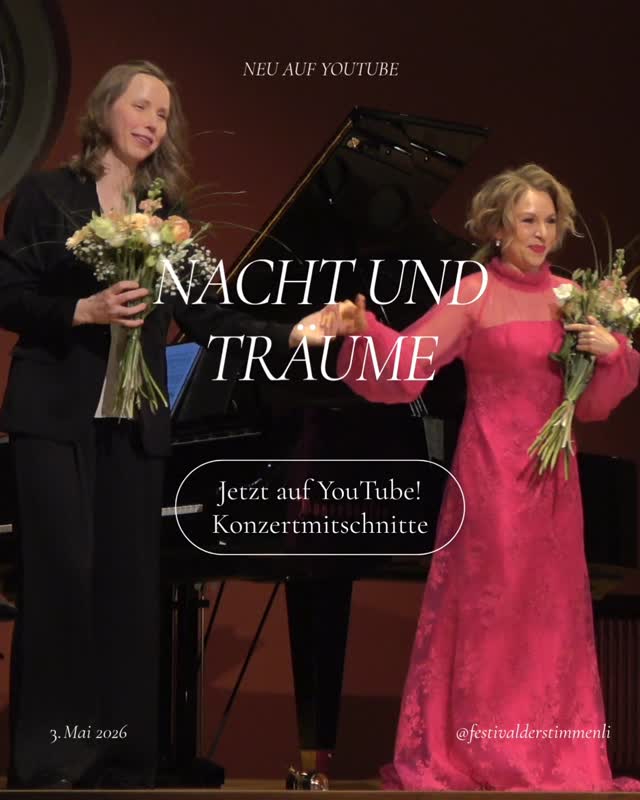
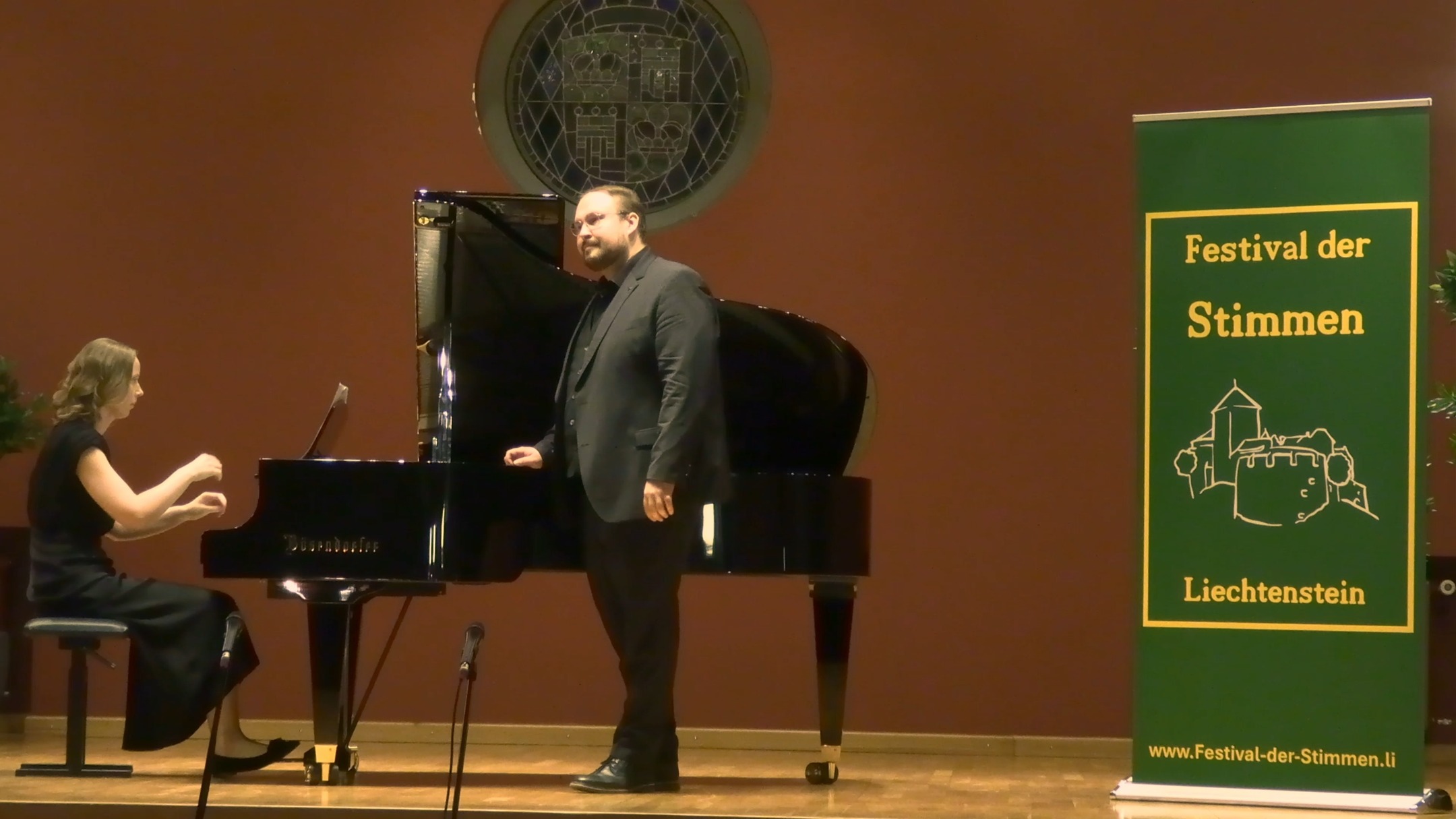
Pianist Evgenia Fölsche has presented “Wenn ich in deine Augen seh’” many times within complete Dichterliebe programmes with various singers (including projects with Benjamin Russell).
FAQ – “Wenn ich in deine Augen seh’” (Schumann, Dichterliebe No. 4)
Click on a question to reveal the answer.
What tempo and expression marking appears in the first edition?
“Langsam” (“Slow”); the piece lives through a calm pulse, subtle agogics, and restrained dynamics.
Which key shapes the song?
D major as the centre, with brief digressions (including A major); the harmony subtly colours the turns of the text.
Is the song strophic?
Yes. A 2-stanza design on an identical musical model.
What role does the piano play?
It is the central carrier of atmosphere: broad, pedalled chords as fields of repose, between them brief gestures; subtle ritardandi at caesuras.
How does the piece function within the cycle?
As a quiet point of repose after No. 3; its tear-point anticipates the more melancholic colouring of later songs.
Sources (Selection)
- First edition (C. F. Peters) – title heading & musical text for No. 4 (“Langsam”, D-major sphere): IMSLP – Dichterliebe 1st edition (PDF)
- Text (Heine) and translations: Oxford Song – “Wenn ich in deine Augen seh’” · Lieder.net – cycle overview / text
- Context / cycle overview: Wikipedia – Dichterliebe
- Analytical remarks (D-major tonality, digressions): UNT Thesis – A Dichterliebe by Robert Schumann (PDF)