“Die Stille” (opening: “Es weiß und rät es doch Keiner”) is Song No. 4 from Robert Schumann’s cycle Liederkreis op. 39 after Joseph von Eichendorff. The poem evokes a secret happiness that retreats into the still inwardness of private thought – until it becomes the wish to fly “like a little bird” across into heaven. Schumann responds with delicate, almost chamber-musical understatement: a hovering pulse, strophic clarity, a brief brightening – and immediate withdrawal.
The Poem (Joseph von Eichendorff)
From: Poems – Intermezzo
Es weiß und rät es doch Keiner,
Wie mir so wohl ist, so wohl!
Ach, wüßt’ es nur Einer, nur Einer,
Kein Mensch es sonst wissen soll!
So still ist’s nicht draußen im Schnee,
So stumm und verschwiegen sind
Die Sterne nicht in der Höh’,
Als meine Gedanken sind.
Ich wünscht’, ich wär’ ein Vöglein
Und zöge über das Meer,
Wohl über das Meer und weiter,
Bis daß ich im Himmel wär’!
Work Data & Overview
- Composer: Robert Schumann (1810–1856)
- Cycle: Liederkreis op. 39 (Eichendorff), No. 4
- Text source: Joseph von Eichendorff (1788–1857)
- Origin (composition): May 1840 (year of song); first published 1842
- Tonal space / notation: bright, calm basic pulse; syllabic vocal line over a connected accompanimental figure
- Tempo indications: quietly moving, cantabile; small inner agogic inflections rather than broad rubato
- Duration: approx. 2 minutes; intimate miniature
- Scoring: voice (various ranges) and piano
- Form: strophic (3 stanzas) with delicate variation; short postlude fading away
Data on the poem
- Poet: Joseph von Eichendorff
- Stanza form: 3 stanzas of 4 lines each
- Rhyme scheme: cross rhyme (ABAB)
- Devices: secrecy, comparative images (snow, stars), longing metaphor “little bird”
Origins & Contexts
In the year of song, 1840, Schumann designed op. 39 as an inward path through images of night, forest, and distance. After the dramatic ballad Waldesgespräch, “Die Stille” steadies the cycle’s breathing: retreat inward, recollection, no pathos – a point of repose before the great visions of Mondnacht.
The poem’s stance is not ascetic, but tenderly discreet: only “one person” should know this happiness – and music becomes the discreet bearer of that secret.
Performance Practice & Reception
Sound ideal: lightly hovering pulse, p–mp, clear syllables – no sentimentality. Piano: connected legato, pedal changing sparingly (clarity before “snow-mist”). The “Vöglein” arch may brighten briefly – then must immediately withdraw.
Reference Recordings (Selection)
- Dietrich Fischer-Dieskau – Christoph Eschenbach
- Elly Ameling – Jörg Demus
- Jessye Norman – Irwin Gage
- Christian Gerhaher – Gerold Huber
- Bryn Terfel – Llŷr Williams
Analysis – Music
Quiet Pulse & Cantabile
The voice lies syllabically, almost speech-close; the piano draws a calm, connected continuum. What matters is the inner movement: micro-dynamics on words of meaning (“wohl,” “stumm,” “Vöglein”) rather than large arches.
Strophic Form, Brightening & Fade
Stanza 1 establishes the discreet basic colour; stanza 2 intensifies through a stiller texture (comparison with “snow” and “stars”). In stanza 3, Schumann briefly opens upward (“Ich wünscht’, ich wär’ ein Vöglein”), but lets the tension flow away in the postlude – the secret remains a secret.
Visual Representation
Artistic visualisation by Evgenia Fölsche:
A still,
nocturnal landscape
lies beneath the
cold light
of the moon.
Snow covers
the ground,
and the forest
stands quiet
and motionless
in the winter
darkness.
In a small
clearing
a single
dark-red rose
grows out of the snow –
delicate
and yet
unexpectedly
alive
within the frosty
stillness.
The image takes up
the poem’s mysterious
reserve.
The thoughts
of the lyrical self
remain hidden,
still
and secretive,
like the landscape
beneath the
night sky.
The rose
thus becomes the sign
of a feeling
that may not be spoken –
a love
that lives
concealed.
Schumann’s music, too,
reflects this
inner tension.
The accompaniment in the piano
remains restrained
and delicate,
as though it were
only cautiously
touching the thoughts
without
speaking them.
Like the lonely rose
in the snow,
the feeling
of the song
also remains hidden –
still,
secret,
and alive
only within.
Analysis – Poetry
“Die Stille” is a poem of hidden inwardness. Unlike the dramatic ballads of the cycle, no outward event unfolds here, but rather a state of intense, protected feeling. The lyrical self preserves a happiness that may not be spoken aloud.
Stanza 1 – Concealed happiness
Es weiß und rät es doch Keiner,
Wie mir so wohl ist, so wohl!
Ach, wüßt’ es nur Einer, nur Einer,
Kein Mensch es sonst wissen soll!
The poem begins with a paradox: no one knows of this happiness – and yet the self wishes that “one person” might recognise it.
The repetition (“nur Einer, nur Einer”) heightens the inward intensity. The happiness is intense, yet at the same time endangered by publicity. It longs to be shared – but only with the one beloved person.
Secrecy becomes the condition for preserving the feeling.
Stanza 2 – Outer and inner silence
So still ist’s nicht draußen im Schnee,
So stumm und verschwiegen sind
Die Sterne nicht in der Höh’,
Als meine Gedanken sind.
Nature appears as a space of comparison. Snow and stars are Romantic symbols of silence and purity.
Yet even this outward winter stillness does not reach the inward reticence. The thoughts are even “stiller.”
The movement thus goes not outward, but ever deeper inward. The happiness is soundless, almost sacred in its preservation.
Stanza 3 – Longing for transcendence
Ich wünscht’, ich wär’ ein Vöglein
Und zöge über das Meer,
Wohl über das Meer und weiter,
Bis daß ich im Himmel wär’!
Only in the final stanza does movement enter. The wish to be “a little bird” stands for freedom and weightlessness.
The sea marks the boundary of the world. Yet the self wishes to go “further” – all the way into heaven.
Here the happiness of love joins with transcendence. The inward feeling is so great that it longs to overstep earthly space. The silence is not emptiness, but abundance.
Meaning & Effect within the Cycle
Within the Liederkreis, “Die Stille” forms a moment of utmost inwardness. While other songs present nature as threat or as dramatic setting, here it appears as a foil of comparison for a hidden happiness.
The poem formulates a central Romantic motif: true feeling withdraws from publicity. It is quiet, protected, and yet boundless.
Schumann’s setting underscores this tenderness. The music carries the tension between restraint and inward radiance. Not pathos, but fine intimacy shapes the expression.
Thus “Die Stille” becomes a poetic core-piece of the cycle: happiness appears as a secret – and precisely in that form as infinitely wide.
Evgenia Fölsche – Performances & Audio
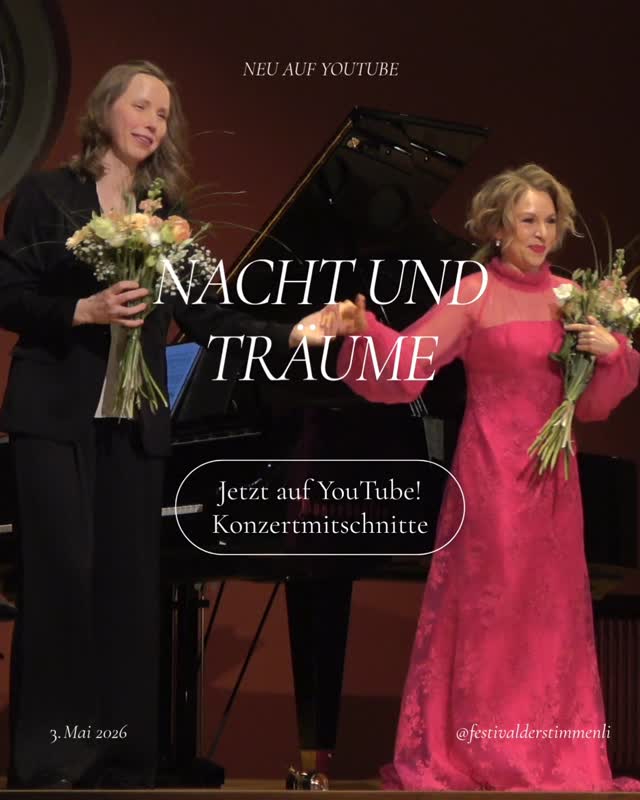
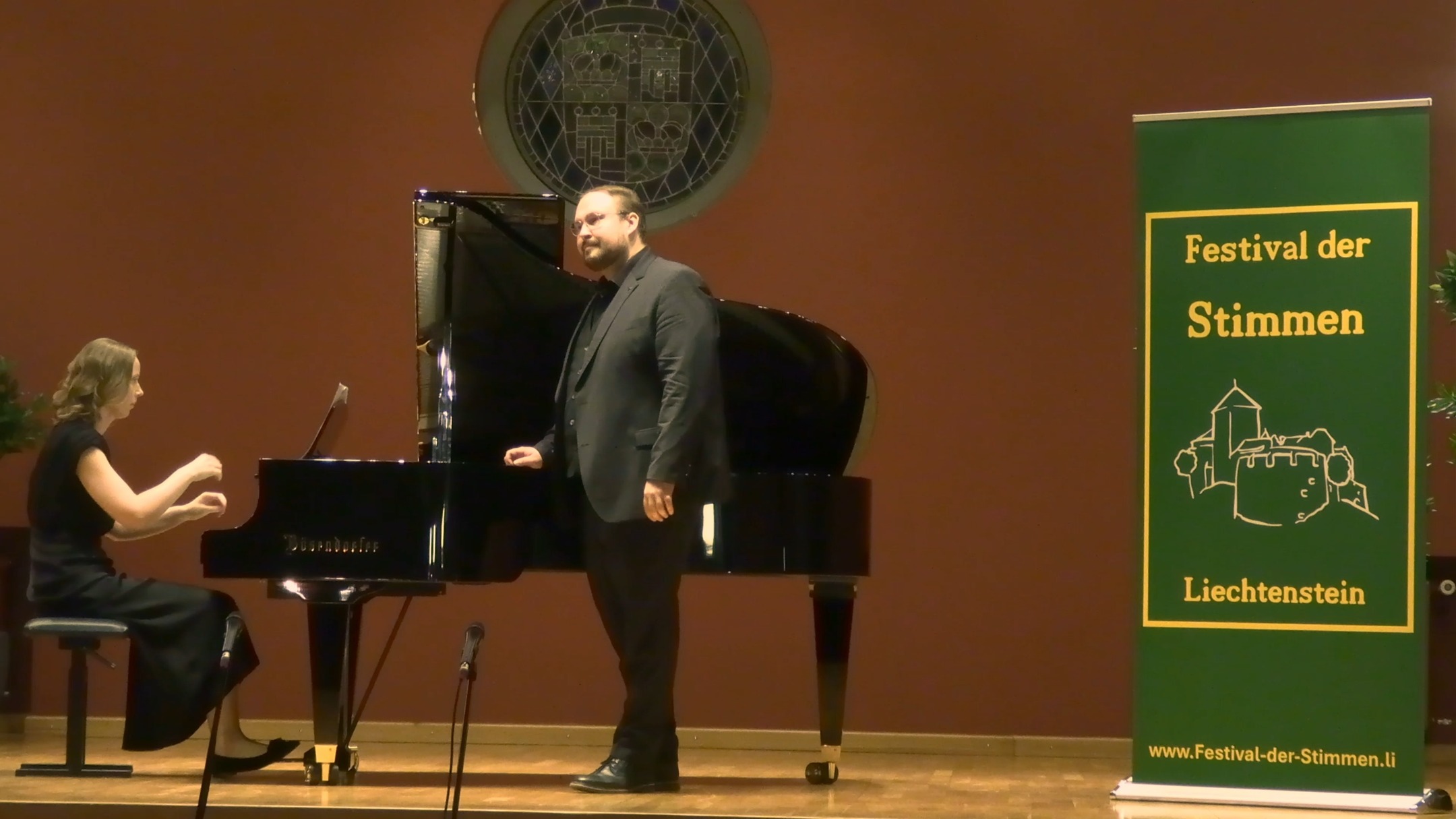
Pianist Evgenia Fölsche shapes “Die Stille” as a “breathing miniature”: elastic pulse, a slender middle register, a small brightening in the “Vöglein” image – followed by complete fading away.
Frequently Asked Questions about “Die Stille” (Liederkreis op. 39, No. 4)
Click on a question to show the answer.
Is the song strophic?
Yes. Three stanzas with delicate variation; the third briefly brightens and then fades away.
How loud may “Die Stille” become?
Basically p–mp. Its effect arises through textual clarity and micro-dynamics, not through volume.
How does it differ from “Intermezzo”?
“Intermezzo” moves more outward and with more swing; “Die Stille” turns inward and preserves – less shine, more repose.
Interpretive tip?
Open the “Vöglein” line discreetly, then immediately draw back – the postlude leaves the secret unsaid.